Foundation Repair
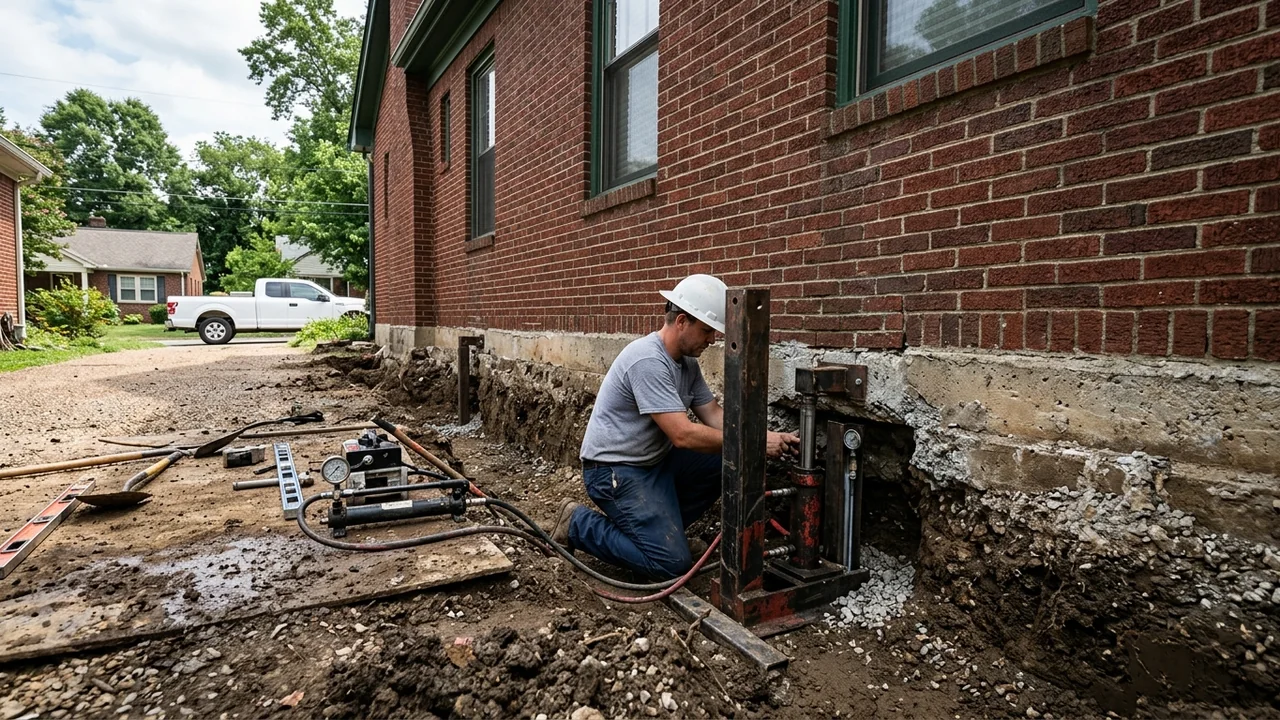
Underpinning and stabilization for settling foundations using hydraulically driven steel push piers or helical screw piers.
Common clues:
- Exterior brick cracks
- Sticking exterior doors
- Sinking corner footings
Key methods:
Middle Tennessee expansive clay soil, seasonal rainfall swings, and limestone bedrock create demanding conditions for residential and commercial foundations. We provide 11 specialized repair services to stabilize footings, straighten walls, lift settled slabs, and protect your property from structural movement.
11
Specialized services
5
Counties served
36
ZIP codes covered

Every home and building requires a repair method matched to its framing, foundation type, and soil movement. Explore each service below to see how we identify and resolve structural concerns.
Underpinning and stabilization for settling foundations using hydraulically driven steel push piers or helical screw piers.
Common clues:
Key methods:
Structural epoxy pressure injection and polyurethane sealants to bond fractured concrete walls and stop water infiltration.
Common clues:
Key methods:
Reinforcement and stabilization for walls deflecting under lateral soil pressure, using carbon fiber straps or earth wall anchors.
Common clues:
Key methods:
High-density expanding polyurethane foam lifting to raise and re-level settled interior slabs without heavy excavation.
Common clues:
Key methods:
Replacement and adjustment of failing support posts, rotted sill plates, and sagging floor joists under crawl spaces.
Common clues:
Key methods:
Vapor barrier encapsulation, heavy-duty support jacks, and conditioning to eliminate moisture, wood rot, and floor bounce.
Common clues:
Key methods:
Polyfoam lifting to restore sunken driveways, sidewalks, pool decks, and garage floors to their proper elevation.
Common clues:
Interior pressure-relief drainage channels, sump pump installations, and exterior water routing to keep basements dry.
Common clues:
Key methods:
High-capacity structural underpinning, void filling, and slab stabilization for commercial and industrial structures.
Common clues:
Specialized tuckpointing, block stabilization, and stone foundation restoration for older and historic buildings.
Common clues:
Thorough visual, structural, and elevation survey to document foundation movement and recommend clear repair solutions.
Common clues:
Key methods:
Middle Tennessee sits primarily on high-plasticity clay soils underlain by karst limestone. During winter and spring rains, these clay soils expand with substantial pressure against basement walls and crawl space footings. In dry summer months, the clay shrinks and pulls away, leaving voids under concrete slabs and footings.
Settlement requires vertical lifting with steel push piers driven to bedrock, whereas bowing walls require horizontal restraint through carbon fiber straps or wall anchors.
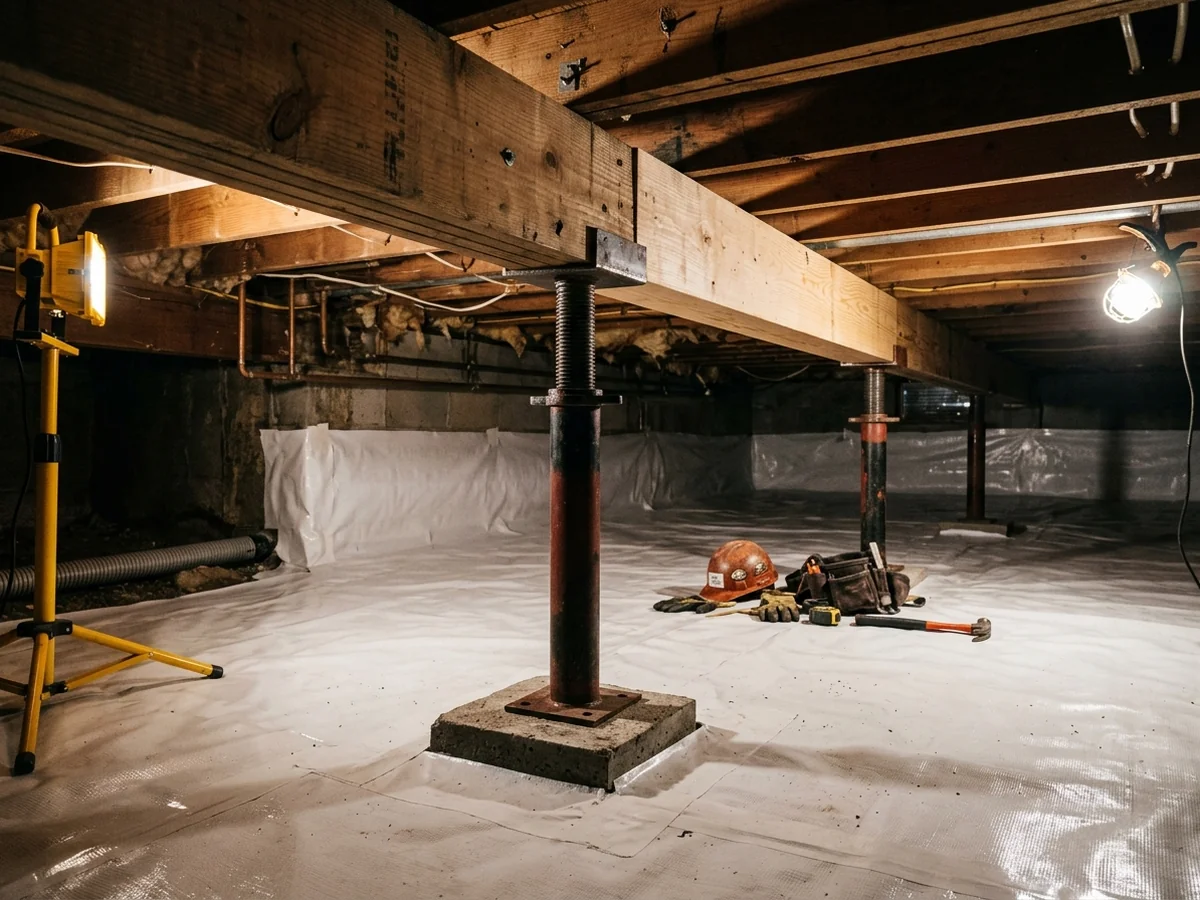
High ground humidity rots wooden beams and causes subfloor sag. Encapsulation paired with heavy-duty adjustable steel jacks stabilizes floor joists permanently.

Foundation issues create worry, so we keep our process clear, honest, and free of sales pressure.
A specialist arrives at your property to inspect visible cracks, measure floor levelness, and examine crawl space or basement walls.
We explain exactly what is causing movement and present practical repair options suited to your goals and your home structure.
Our crew installs proven structural systems, such as steel push piers or carbon fiber straps, with minimal disturbance to your landscaping.
We re-check elevations, review completed stabilization points, and ensure your foundation is secure for the long term.
Covering 36 ZIP codes across 5 Middle Tennessee counties with dedicated local service.
Direct answers to questions Middle Tennessee property owners ask before choosing a repair path.
Speak directly with a local foundation specialist. We will discuss your symptoms, answer your questions, and arrange an on-site inspection to evaluate your property with zero pressure.