Lateral Stabilization & Wall Reinforcement

Basement & Foundation Wall Repair in Nashville & Middle Tennessee

When heavy Middle Tennessee clay expands with seasonal rainwater, it exerts intense lateral pressure against basement and crawl space walls. This inward force leads to horizontal cracking, wall bowing, and inward tilting. We diagnose the exact deflection pattern and permanently stabilize your foundation using aerospace-grade carbon fiber straps and engineered earth wall anchors without having to rebuild the wall.

Carbon Fiber

Zero lawn excavation

Earth Anchors

Straightens bowed walls

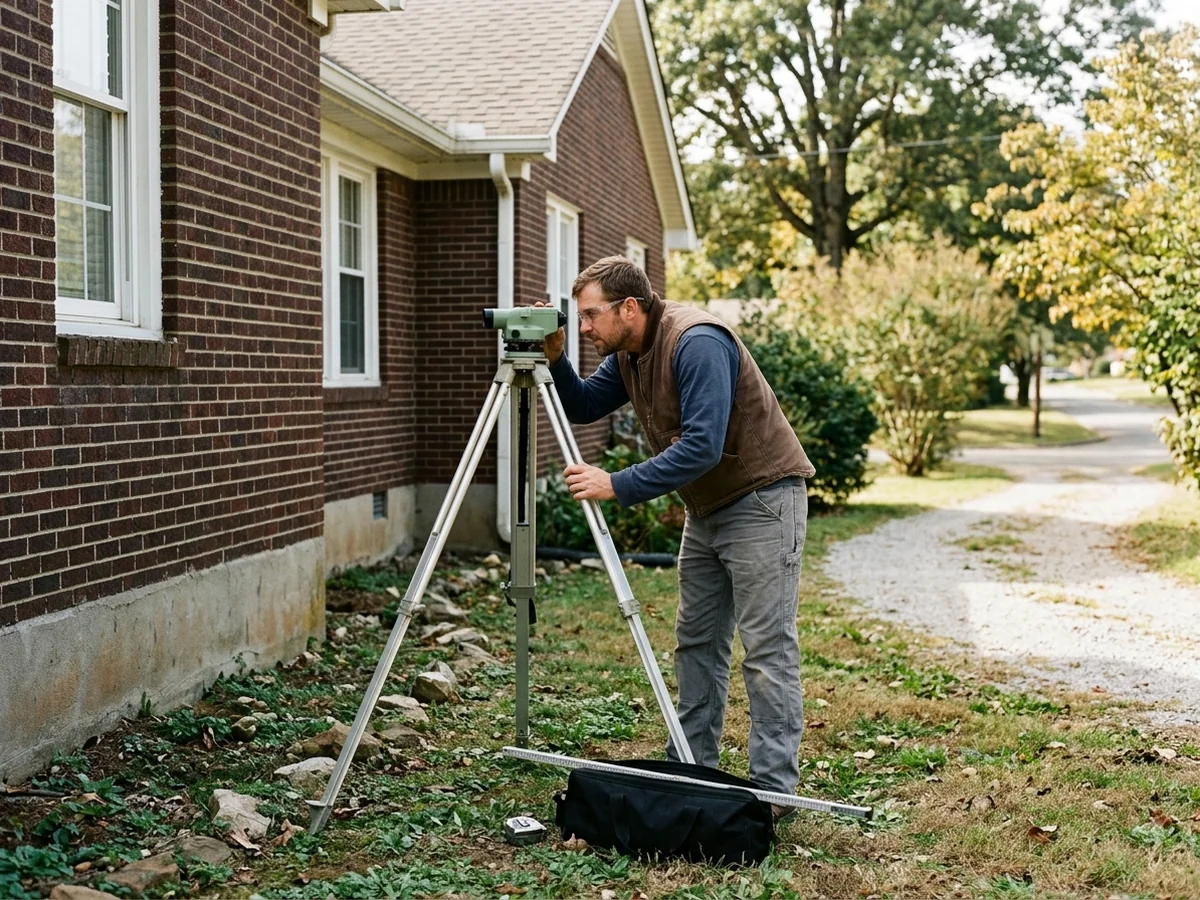
Laser Survey

Precise plumb analysis

Foundation repair specialist conducting precision laser deflection survey on a residential basement wall in Middle Tennessee
Laser deflection survey: precision measurement records inward curvature, out-of-plumb tilt, and footer shear to determine the exact engineering solution.
Diagnostic Evaluation

Signs of Structural Foundation Wall Failure

Foundation walls fail in distinct geometric patterns based on how exterior soil pressures and framing loads interact. Identifying the symptom helps determine the correct structural repair.

Horizontal Mid-Wall Cracking

High Structural Concern

Visual Pattern:

Continuous horizontal crack running along the middle or lower third of the wall

Root Cause:

Lateral hydrostatic soil pressure exceeding the tensile capacity of concrete or mortar

A horizontal crack indicates the wall is bending inward at the point of greatest soil pressure. In block walls, the mortar joint opens up; in poured walls, the concrete fractures.

Recommended Repair:

Carbon fiber reinforcement straps if deflection is under 2 inches, or heavy steel wall anchors if deflection is greater.

Inward Bowing & Center Bulging

Critical Structural Deflection

Visual Pattern:

Wall curvature bulging inward into the basement living or storage area

Root Cause:

Heavy expansive clay expanding and pressing inward during rainy seasons

When expanding clay soil presses against subterranean walls, the wall curves like a bow. Without reinforcement, progressive bowing can lead to sudden shear failure.

Recommended Repair:

Engineered earth wall anchors to stabilize and incrementally pull the wall straight, or carbon fiber straps for mild deflection.

Inward Leaning at Wall Top

Critical Connection Failure

Visual Pattern:

Top of the foundation wall tilts inward while the bottom remains in place

Root Cause:

Shear failure at the connection between the top of the foundation and the floor joists

Occurs when exterior soil pushes the top of the wall inward past the mudsill and rim joist framing, compromising floor support above.

Recommended Repair:

Heavy-duty wall anchors tied to stable yard soil combined with top rim joist structural brackets.

Base Shear & Footer Sliding

Severe Foundation Shear

Visual Pattern:

Bottom block course or wall base slides inward along the concrete footing

Root Cause:

Saturated soil pressure overcoming the frictional bond between footer and wall

The bottom course of block or poured concrete kicks inward into the basement floor slab, leaving the outer wall edge unsupported.

Recommended Repair:

Structural steel soldier I-beams anchored deep into the floor slab, paired with perimeter water management.

Stair-Step Mortar Fractures

Moderate to High

Visual Pattern:

Diagonal zigzag cracks running through mortar joints in concrete block walls

Root Cause:

Uneven lateral pressure combined with differential footing movement

Common in Middle Tennessee concrete block basements where soil pressure pushes inward while corner footings experience subtle seasonal settlement.

Recommended Repair:

Carbon fiber grid reinforcement across fracture planes paired with crack sealing and exterior drainage.

Framing Separation & Sticking Doors

Moderate Secondary Impact

Visual Pattern:

Gaps appearing between drywall, door jambs, and subfloor above the basement wall

Root Cause:

Inward wall rotation shifting the weight of upper floor joists and load-bearing partitions

As basement walls tilt or bow, the upper framing twists, causing interior door latches to bind, windows to stick, and drywall seams to split.

Recommended Repair:

Stabilizing the foundation wall halts upper framing distortion and preserves interior finishes.

Engineered Technologies

Professional Foundation Wall Repair Systems

Rebuilding a damaged foundation wall is disruptive and expensive. We utilize proven structural reinforcement systems that halt inward movement and restore lateral wall stability.

Carbon Fiber Reinforcement Straps

High-modulus composite strapping that bonds flush to interior walls with zero lawn excavation

Engineered from aerospace-grade carbon fiber woven fibers, these straps are epoxy-bonded vertically to the interior face of bowing concrete or masonry walls. Ten times stronger than steel in tension, carbon fiber distributes lateral soil loads and locks the wall permanently in place. The straps lie virtually flat against the wall, allowing them to be painted or finished over seamlessly.

Best Suited For:

Walls bowed less than 2 inches without base shear or severe inward leaning at the top.
Engineered Earth Wall Anchors

High-strength steel tie-rod systems that stabilize and incrementally pull bowed walls straight

Earth wall anchors utilize the passive resistance of stable, undisturbed soil in your yard. A steel anchor plate is embedded deep in virgin soil beyond the active expansion zone. A heavy steel tie-rod connects the outdoor anchor to an interior wall plate. By torquing the interior tightening nuts during dry periods, the system can incrementally pull bowed and leaning walls back toward plumb.

Best Suited For:

Walls bowed more than 2 inches, walls leaning inward at the top, or when wall straightening is desired.

Structural Steel Soldier Beams

Heavy steel H-beams anchored from concrete floor slab to overhead floor joist framing

When exterior property lines, paved driveways, or buried utility easements prevent digging in the yard for earth anchors, structural steel soldier beams provide an interior solution. Heavy steel I-beams are set vertically against the wall, anchored into the concrete floor slab at the bottom, and secured with engineered brackets to ceiling floor joists at the top.

Best Suited For:

Severe bowing or base sliding where exterior yard space is obstructed or unavailable.

Applied when exterior yard access is obstructed
Engineering Comparison

Carbon Fiber Straps vs. Earth Wall Anchors

Comparing our two primary foundation wall stabilization systems based on deflection severity, yard access, and straightening goals.

Deflection capacity

Carbon Fiber Straps

Best for walls bowed under 2 inches without shear

Earth Wall Anchors

Engineered for severe bowing exceeding 2 inches and leaning walls

Straightening capability

Carbon Fiber Straps

Stabilizes wall permanently; does not straighten existing bow

Earth Wall Anchors

Can be tightened over time to pull the wall back toward level plumb

Excavation required

Carbon Fiber Straps

Zero exterior excavation; 100% installed from inside basement

Earth Wall Anchors

Small access hole in yard soil roughly 12 to 14 feet from house

Finished wall profile

Carbon Fiber Straps

Paper-thin, smooth, low-profile; easily painted or framed over

Earth Wall Anchors

Steel wall plate (approx. 12x12 inches) with protruding threaded nut

Yard clearance needed

Carbon Fiber Straps

None required; ideal for homes close to lot lines or driveways

Earth Wall Anchors

Requires accessible yard space outside the foundation wall

Tensile load strength

Carbon Fiber Straps

Over 350,000 psi ultimate tensile fiber strength

Earth Wall Anchors

Heavy galvanized high-strength steel rod and earth anchor plate

Middle Tennessee Soil Dynamics

Why Basement Walls Bow Across the Nashville Basin

Middle Tennessee sits on dense Ordovician limestone mantled by thick deposits of high-plasticity clay. This geological combination is notorious for exerting severe lateral loads on basement walls.

Expansive Clay Swell Cycles

When winter rains and spring storms saturate backfill clay, the soil expands significantly. Saturated clay can weigh in excess of 120 pounds per cubic foot, creating relentless inward hydrostatic pressure that pushes against basement masonry.

Summer Drought Creep & Voids

During dry Middle Tennessee summers, clay shrinks and pulls away from the wall, allowing dirt and debris to wash down into the gap. When rains return, the re-expanding clay has even less room to swell, ratcheting the wall further inward season after season.

Preserving Upper Home Structure

Foundation walls support the entire timber framing of your home. Stopping wall deflection protects first-floor joists, prevents door frames from skewing, and keeps drywall from fracturing throughout upper levels.

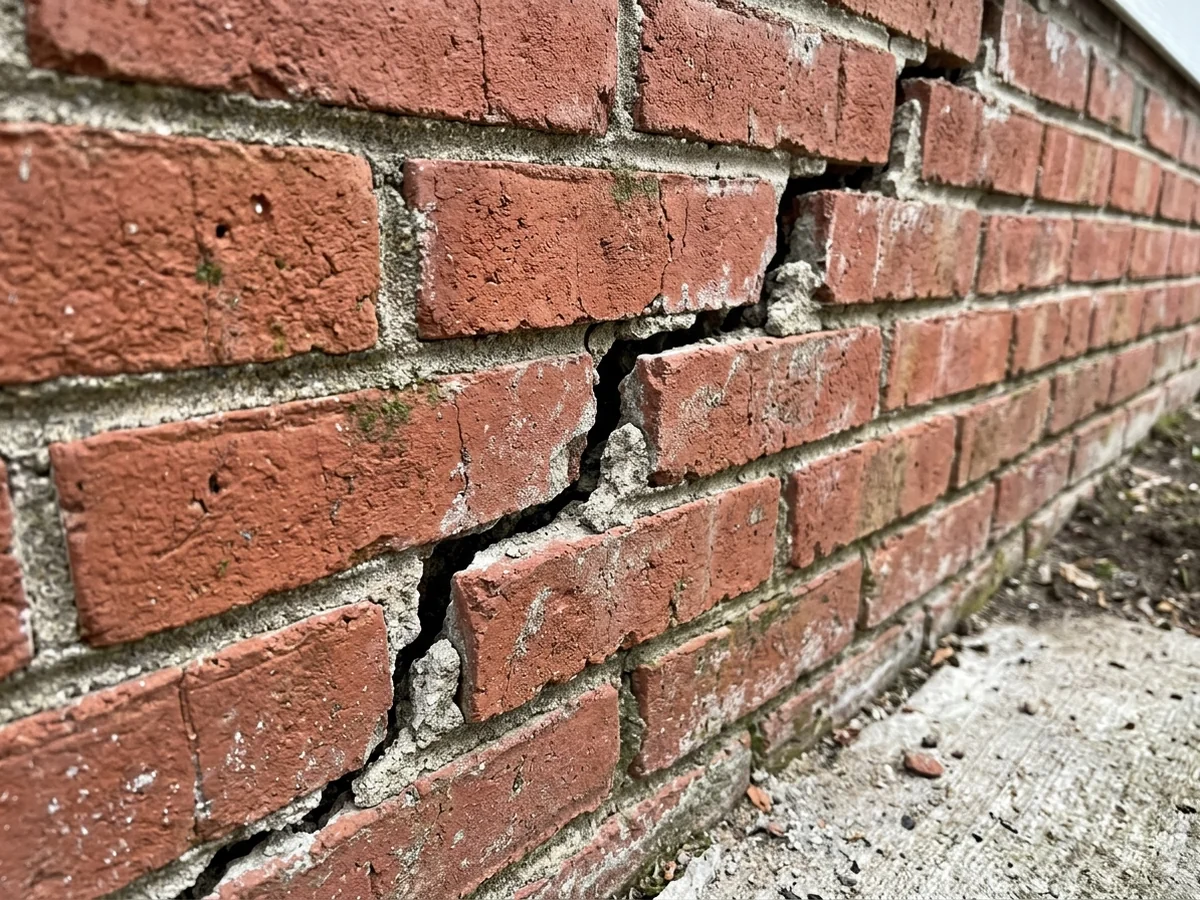
Inspection view of foundation wall shear and mortar cracking caused by exterior soil pressure in Middle Tennessee
Mortar joint fracture: intense lateral clay expansion causes masonry block walls to crack along mortar joints and deflect inward toward the basement interior.
Step-by-Step Methodology

How Foundation Walls Are Professionally Stabilized

Every wall repair project follows an engineered sequence designed to lock the wall in place and safeguard your home against future soil movement.

1

Laser Deflection Survey

We map the entire wall using precision optical and laser levels, measuring maximum inward bow, checking footer shear, and identifying the exact deflection curve.

2

Engineering Method Selection

Based on deflection measurements, wall construction type (poured concrete vs. block), and yard clearance, we determine whether carbon fiber or wall anchors are the optimal solution.

3

Wall Face Preparation

Technicians mechanically grind the interior concrete or block surface to remove paint and efflorescence, creating a clean mechanical bonding plane.

4

System Placement & Anchoring

Carbon fiber straps are saturated with structural epoxy and bonded at engineered intervals, or steel anchor rods are driven through core holes out to yard anchor plates.

5

Structural Connection & Securing

Top brackets are bolted into the overhead rim joist framing, bottom anchors are secured into the concrete floor slab, and wall anchor tie-rods are torqued to specification.

6

Final Plumb Verification

Technicians re-measure the wall elevation and deflection, confirming that lateral loads are fully stabilized and structural integrity is permanently restored.

Comprehensive Structural Solutions

When Wall Repair Pairs with Underpinning or Water Management

Bowing walls often indicate broader soil drainage challenges or uneven foundation settlement. Explore related structural stabilization and waterproofing solutions.

Frequently Asked Questions

Questions About Basement Wall Repair

Practical answers to common questions Middle Tennessee homeowners have about bowing walls, anchors, and carbon fiber.

What causes basement walls to bow or lean inward in Middle Tennessee?

The primary driver across Nashville and surrounding counties is expansive clay soil. During wet winter and spring months, Middle Tennessee clay absorbs water and expands dramatically, creating thousands of pounds of lateral hydrostatic pressure against subterranean basement walls. When this outward soil pressure exceeds the structural strength of the wall, the wall cracks, bows inward, or shears along the footer.

Can a bowed basement wall be straightened back to plumb?

Yes, in many cases a bowed or leaning wall can be straightened. Earth wall anchors can be tightened incrementally over dry summer months when clay soil contracts, gradually pulling the wall back toward its original plumb position. For minor bowing under two inches where straightening is not required, carbon fiber straps stabilize the wall permanently right where it is.

How do I know if my bowed wall needs carbon fiber straps or wall anchors?

The choice depends on the amount of inward deflection and available yard space. If the wall has bowed less than two inches and has not slipped along the footer or tipped at the top, carbon fiber straps are an ideal zero-excavation fix. If the wall is deflected more than two inches, is leaning inward at the top, or you wish to straighten it over time, wall anchors are the recommended engineered solution.

Is a horizontal crack in my basement wall dangerous?

A horizontal crack across the mid-height of a basement wall is a serious structural indicator. Unlike small vertical curing cracks, a horizontal crack means the wall is bending inward under lateral soil pressure and has lost its structural beam continuity. While it does not mean the wall will collapse immediately, it requires prompt professional stabilization before deflection worsens.

Will repairing my bowed basement wall damage my lawn or landscaping?

Carbon fiber strap installation requires zero exterior excavation and is performed entirely from inside your basement, leaving lawns and flower beds completely untouched. If wall anchors are needed, small sod sections (approx. 2 by 2 feet) are neatly set aside in your yard, the earth anchor is driven, and the sod is replaced, keeping landscape disruption minimal.

Can you fix bowing basement walls constructed of concrete block or cinder block?

Yes. Concrete block and cinder block foundations are particularly susceptible to lateral soil pressure along mortar joints. Both carbon fiber straps and earth wall anchors are engineered specifically to stabilize hollow and solid masonry block walls, preventing blocks from shifting inward and sealing mortar fracture planes.

Have Your Basement Wall Evaluated

Speak directly with an experienced local foundation specialist. We will measure wall deflection, evaluate soil pressure conditions, and outline practical engineered solutions with zero sales pressure.