Foundation Settlement Repair in Nashville & Middle Tennessee
When soil shifts beneath your home, footings drop and exterior brickwork cracks. We stabilize sinking foundations and lift homes back toward level using engineered steel push piers and helical piers driven past shifting clay down to solid Middle Tennessee bedrock.
Foundation settlement cannot be fixed by patching cracks on the surface. Long-term stabilization requires transferring the structure load onto stable, load-bearing strata below.
Steel Push Piers
Permanent Support
End-bearing stabilization driven directly to solid limestone bedrock
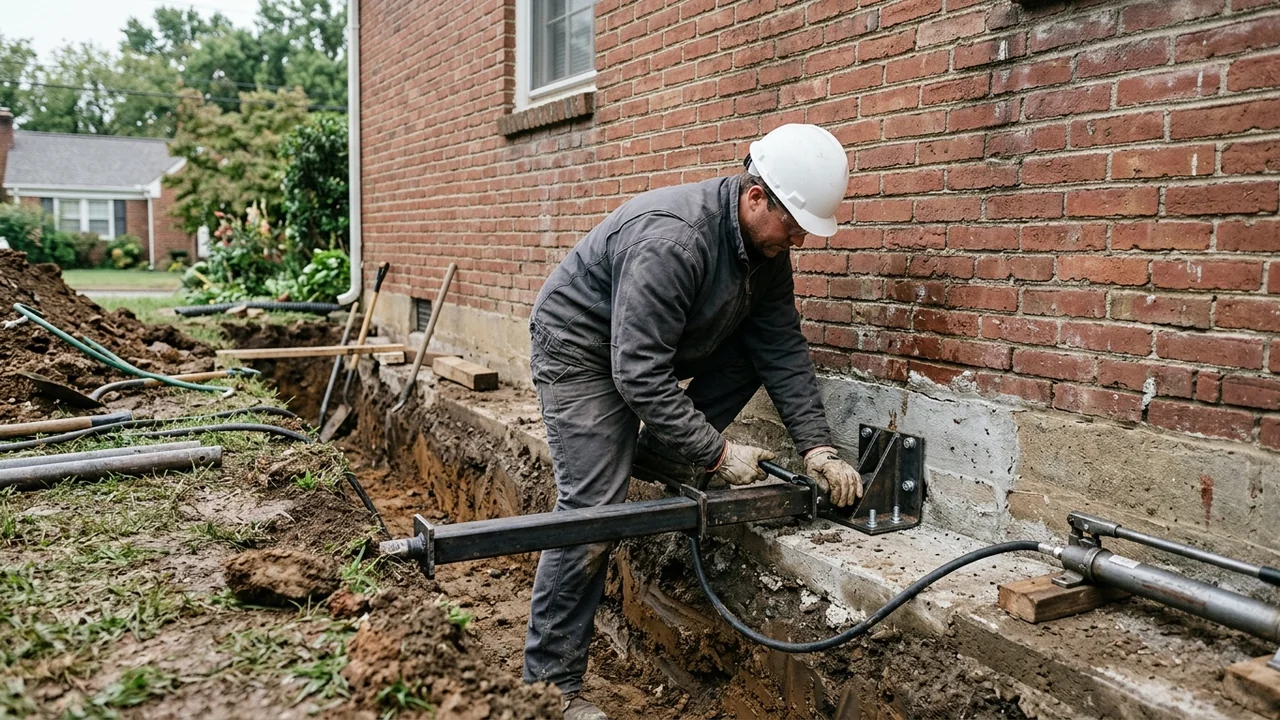
High-strength steel pipe sections are hydraulically driven through unstable clay into solid limestone bedrock using the weight of the structure as resistance. Heavy-duty steel foundation brackets transfer the home's structural load directly onto the piers, allowing controlled hydraulic lifting to close cracks and restore elevation.
Best Application:
Heavier two-story homes, full brick veneer, and deep bedrock conditions.
Key Engineering Advantages:
Reaches load-bearing bedrock regardless of shallow clay instability
Minimal disruption to exterior landscaping and lawns
Provides measurable load verification during hydraulic installation
Capable of lifting settled structures back toward original elevation
Torque-monitored screw piles for lighter structures and variable soil
Helical piers feature round steel shafts with round screw blades (helices) welded along the lead section. Hydraulic drive heads twist the pier into the ground like a large screw. Installation depth and load capacity are verified continuously by monitoring hydraulic installation torque.
Best Application:
Additions, sunrooms, lighter single-story framing, porches, and sites where bedrock is unusually deep.
Key Engineering Advantages:
Can be installed without using the weight of the building as a reaction force
Ideal for new construction footings, slab additions, and porch columns
Instant capacity verification based on recorded installation torque
Rapid installation in tight residential lot access situations
Local foundation movement is rarely caused by poor initial construction. Instead, it is driven by the interaction between Middle Tennessee high-plasticity clay soils, seasonal climate swings, and underlying karst limestone geology.
Seasonal Moisture Swings
Clay soils swell significantly during wet winter months and contract severely during hot, dry summer stretches. When clay shrinks below perimeter footings, it pulls away, leaving the home unsupported.
Limestone Bedrock Irregularity
Bedrock depth across Nashville and surrounding counties varies dramatically, sometimes from three feet to twenty feet on the very same residential lot. Driving piers to actual refusal ensures uniform structural support.
Laser Elevation Surveys Pinpoint Settlement
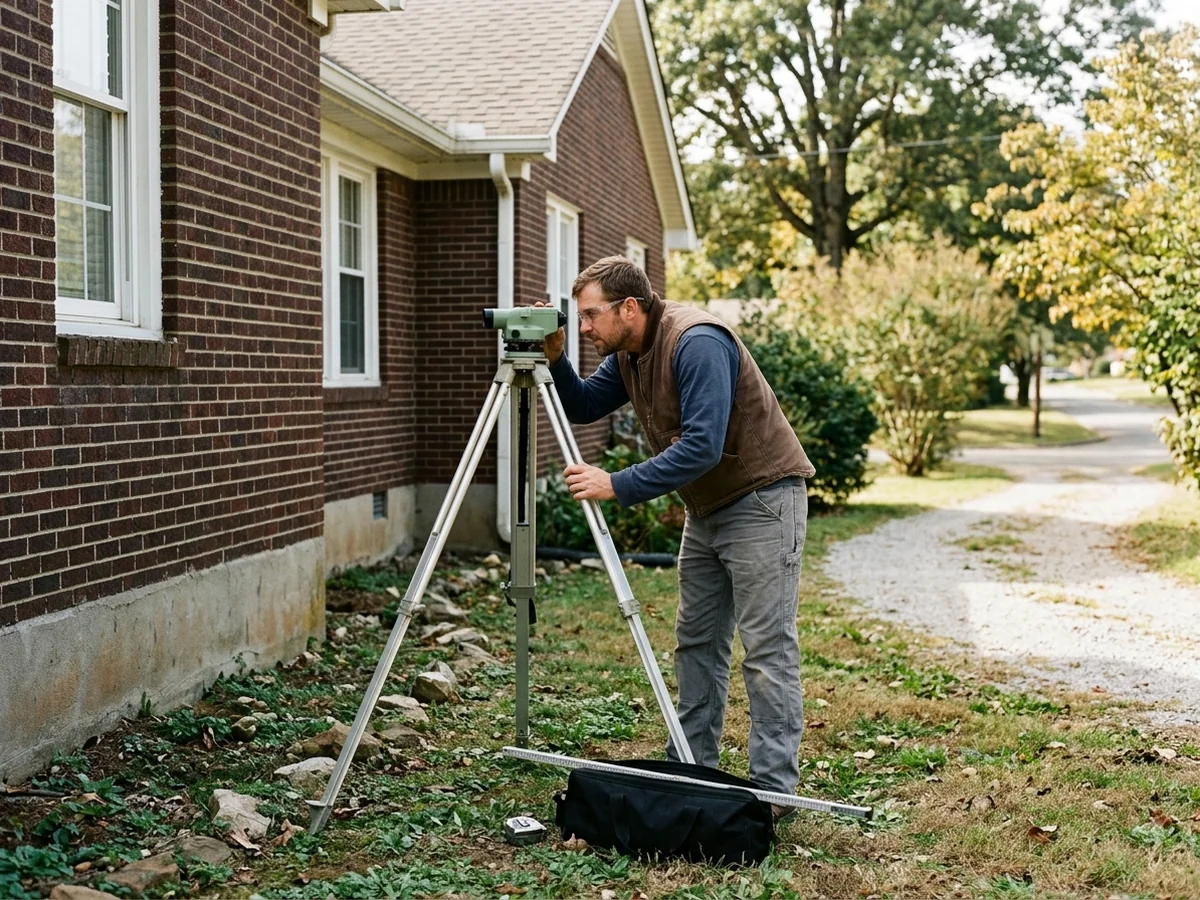
Visual checks alone cannot identify whether the front of a home is dropping or the back is heaving. We utilize electronic elevation surveys to create an accurate contour map of your floor elevations before designing repairs.
Precision elevation survey: mapping centimeter-level floor variations along the foundation perimeter to pinpoint exact settlement zones.
Step-by-Step Installation
What to Expect During Foundation Underpinning
A systematic installation process designed for structural reliability and minimal site disruption.
1
Elevation Survey & Mapping
We establish a benchmark and take high-precision electronic elevation readings throughout the home to map exactly where and how much the foundation has dropped.
2
Engineered Bracket Preparation
Small excavations expose the concrete footing at designated underpinning locations. The footing is notched and smoothed so heavy steel brackets fit securely against sound concrete.
3
Hydraulic Pier Driving
Steel pier sections are driven into the earth until they achieve refusal on competent limestone bedrock or meet verified hydraulic pressure ratings.
4
Synchronized Hydraulic Lift
Hydraulic lifting cylinders connected to a manifold apply even upward pressure, lifting settled walls back toward level and closing settlement cracks where framing allows.
5
Locking & Backfill
The brackets are mechanically locked in place to hold the structural load permanently. Excavation zones are backfilled, tamped, and cleaned up cleanly.
Regional Service Areas
Foundation Settlement Repair Across Middle Tennessee
We provide on-site foundation inspections and deep underpinning across Davidson, Williamson, Rutherford, Montgomery, and Wilson counties.
Honest answers to questions Middle Tennessee homeowners have about piers, leveling, and structural movement.
How do I know if my foundation is sinking or just experiencing normal settling?
Hairline cracks in drywall during the first year of new construction can be normal drying shrinkage. However, stair-step cracks through exterior brick mortar, sticking exterior doors, gaps between floor and baseboards, and elevation drops greater than one-quarter inch across a room are signs of structural settlement that require professional evaluation.
What is the difference between steel push piers and helical piers?
Steel push piers use the weight of the home to drive steel pipe straight down to bedrock, making them ideal for heavy brick homes. Helical piers use rotating hydraulic motors to screw helical blades into load-bearing soil strata, making them suitable for lighter additions, porches, and locations where bedrock depth varies widely.
Will foundation underpinning lift my home all the way back to level?
In many cases, hydraulic piers achieve substantial lift, often closing brick cracks and freeing stuck doors. However, lifting is carefully balanced against structural resistance and interior finishes to avoid secondary stress on plumbing, framing, or roofing. Stabilization to stop further downward movement is always the primary engineering objective.
How long does a typical residential pier installation take?
Most residential foundation underpinning projects in Middle Tennessee require between two and four days of on-site work, depending on the number of piers needed and site accessibility around the perimeter.
Why does drought in Middle Tennessee cause foundation settling?
Middle Tennessee expansive clay contains significant moisture. During hot, dry summer periods, the clay dries out and shrinks, losing volume. As the soil pulls away and drops beneath exterior concrete footings, the foundation loses its supporting soil base and settles downward.
Can a structural engineer inspect the repair plan?
Yes. When requested or required by local municipal building codes, an independent licensed professional engineer can review elevation surveys, evaluate pier spacing, and provide stamped engineering specifications.
Worried Your Foundation Is Sinking?
Speak directly with a Middle Tennessee foundation specialist. We will discuss your symptoms, conduct a thorough on-site elevation survey, and explain your stabilization options with no pressure and no guesswork.