Foundation Repair & Underpinning in Franklin, TN
Custom residences in Franklin and Williamson County carry substantial dead loads on high-plasticity smectite clay. When summer droughts shrink the supporting soil, footings settle and exterior brickwork cracks. We install engineered steel push piers driven to refusal on solid Ordovician limestone bedrock, permanently stabilizing your home across all three Franklin ZIP codes.
Bedrock
Direct load transfer
Hydraulic
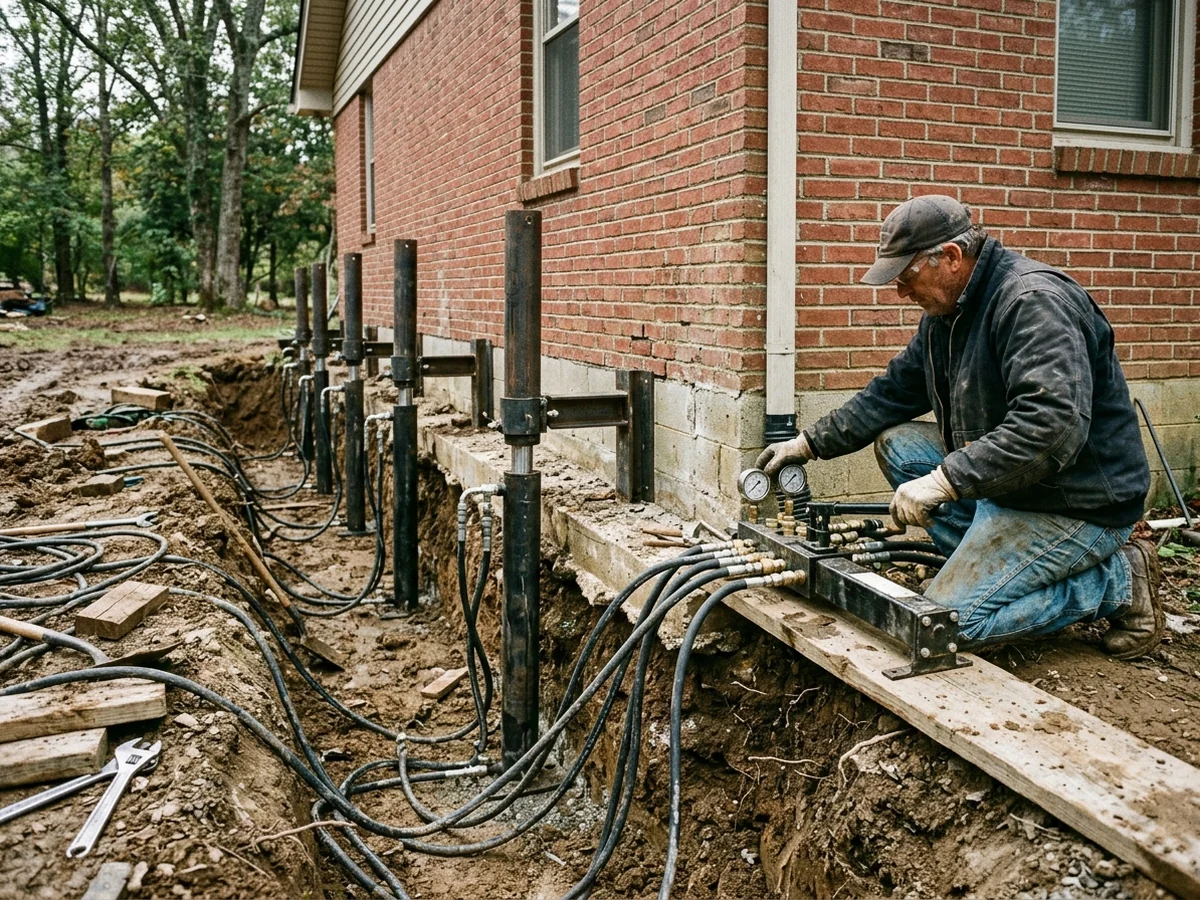
Manifold lifting
Zero
Travel fees in 370XX
Heavy-Load
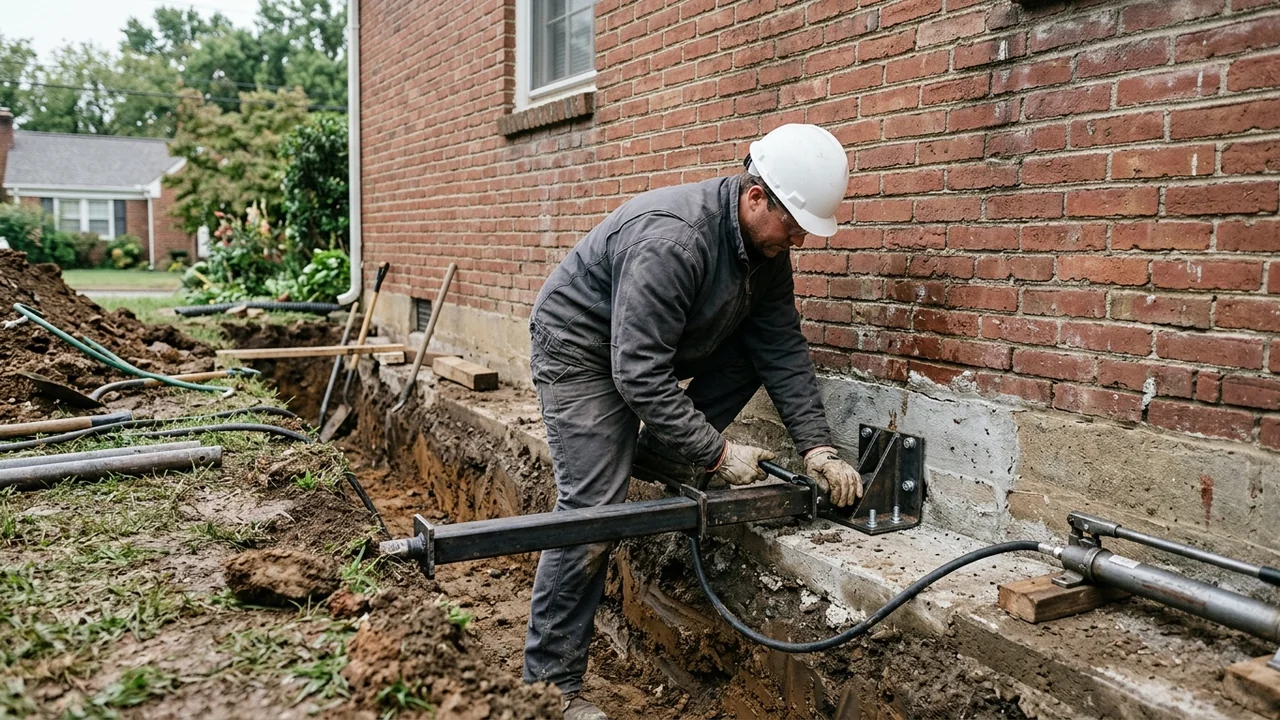
Steel brackets
Signs of Active Foundation Settlement in Franklin Homes
Because Franklin custom homes are built with rigid masonry and multi-story framing, differential settlement produces visible warning signs inside and outside the home.
Exterior Brick & Stone Separation
Settlement ClueStair-step cracks along mortar joints or separation between stone veneer and window frames indicate that perimeter footings have dropped away from upper framing.
Interior Doors Sticking at Top Corners
Settlement ClueWhen one corner of a home settles into shrinking clay, the structural frame distorts, causing doors to bind against the top strike jamb or pop open spontaneously.
Separation Along Frieze Boards & Gutters
Settlement ClueNoticeable gaps appearing where the roofline or soffit meets exterior masonry walls signal that foundation walls are dropping unevenly.
Sloping or Uneven Finished Floors
Settlement ClueFloor elevation measurements showing a downward pitch toward exterior corners point to concentrated footing settlement beneath load-bearing exterior walls.
The Bedrock Underpinning Process
Stabilizing settled custom homes in Williamson County requires an engineered approach that anchors the structure past seasonal clay movement down into bedrock.
Related Services & Guides
Learn more about our comprehensive foundation solutions across Franklin and Middle Tennessee.
Franklin Hub
Complete overview of Williamson County services, soil risks, and all 3 ZIP codes.
Foundation Repair Hub
In-depth look at our structural underpinning systems, engineering specs, and pier types.
Steel Push Piers Guide
Technical guide explaining how hydraulically driven push piers achieve bedrock load transfer.
Franklin Crawl Space Repair
Vapor barrier encapsulation and adjustable support jacks for Williamson County crawl spaces.
Franklin Foundation Underpinning FAQs
Clear answers to help you understand foundation settlement, push piers, and bedrock stabilization.
Why do custom residences in Franklin require steel push piers instead of concrete pads?
Williamson County soils contain active smectite clays that expand and shrink across seasonal moisture changes down to depths of ten feet or more. Pouring shallow concrete pads or shimming footings leaves the home resting on the same reactive clay that caused the settlement in the first place. Steel push piers bypass active soil entirely, transferring building loads directly into competent Ordovician limestone bedrock.
How does the hydraulic push pier installation process work?
We excavate small access pits beside the settled footing, attach heavy-gauge commercial steel brackets to the concrete base, and hydraulically drive high-strength steel pier sections downward. As each section penetrates the soil, hydraulic pressure is monitored until the pier reaches solid refusal on bedrock. Once all piers are seated, a synchronized hydraulic manifold gently lifts the structure toward its original elevation.
Can steel push piers support heavy custom homes with natural stone facades?
Yes. Our commercial-grade push pier systems are engineered specifically for high-load residential structures. Each pier bracket is engineered to support substantial structural loads, making them ideal for heavy multi-story brick, stone masonry, and slate-roof custom residences in Franklin and Brentwood.
How do you know when a pier has reached solid bedrock?
During installation, hydraulic driving pressure is continuously monitored on calibrated gauges. Bedrock refusal is reached when driving pressure exceeds the structural lifting capacity required for the building. This guarantees the pier is firmly anchored in load-bearing limestone before any lifting begins.
Do you service homes in Westhaven, Cool Springs, and Leiper's Fork?
Yes. We provide complete foundation underpinning and elevation surveys across all three Franklin ZIP codes (37064, 37067, 37069) with zero on-site travel charges.
How do I schedule an on-site foundation underpinning inspection in Franklin?
Call our local office directly or submit an inspection request through our contact form. A foundation specialist will examine visible symptoms, record precision digital elevation levels across your floor plane, and provide a clear written assessment with zero sales pressure.
Schedule Your Franklin Foundation Underpinning Inspection
Do not let progressive clay soil movement crack your brickwork or twist door frames. Speak directly with our local specialist to evaluate your foundation and explore bedrock underpinning options.
Zero on-site travel charges across 37064, 37067, and 37069. Honest evaluations and bedrock solutions.