Service Pillar Hub | Subfloor Stabilization & Moisture Control
Crawl Space Foundation Repair in Nashville & Middle Tennessee
Damp, unsealed crawl spaces allow groundwater evaporation and humid summer air to rot structural floor joists, foster mold growth, and destabilize foundation piers. Our engineered crawl space solutions combine clean 20-mil vapor barrier encapsulation, automated commercial dehumidification, and heavy-duty steel support jacks to permanently protect your home framing and restore solid, level floors.
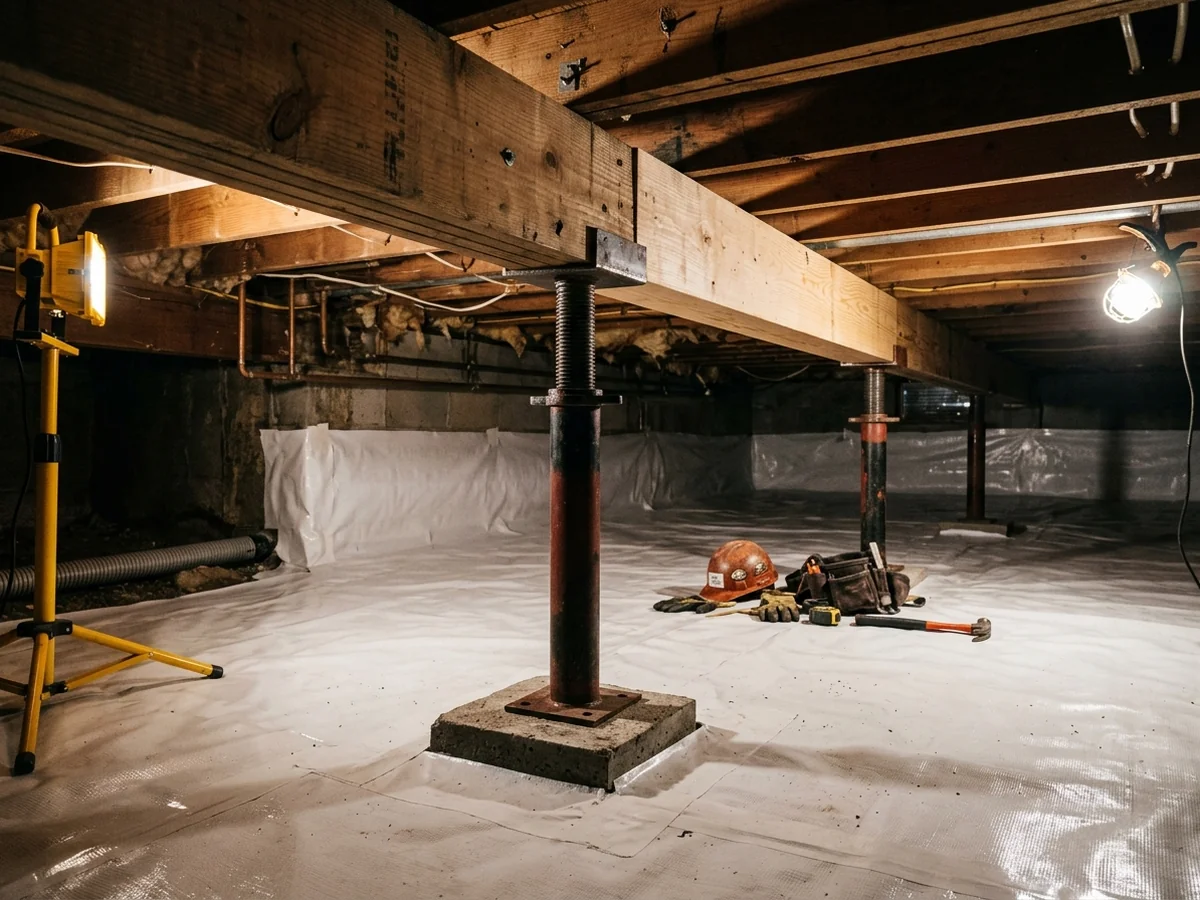
Complete encapsulation & structural support: a sealed 20-mil reinforced vapor barrier isolates soil moisture, while heavy-duty steel support columns on concrete pads permanently stabilize central carrying girders.
Warning Indicators
Common Signs of Crawl Space Moisture & Structural Failure
Because up to half of first-floor breathing air comes from the crawl space, subfloor moisture problems quickly affect indoor air quality, comfort, and structural levelness.
Musty Odors in Living Areas
Damp crawl space air naturally rises into the home through the stack effect, carrying mold spores, earthy mildew odors, and elevated humidity into first-floor living rooms.
Bouncy, Spongy, or Sagging Floors
Excessive moisture softens timber framing, allowing floor joists to deflect downward, vibrate underfoot, and create sloping troughs across rooms.
Visible Mold & Fungal Wood Decay
White, green, or black fungal colonies growing along wooden subflooring and floor joists indicate sustained moisture contents exceeding 20 percent, destroying timber fiber strength.
High Indoor Humidity & Sweating Ducts
Air conditioning systems struggle to dehumidify homes when unsealed crawl spaces continually pump damp, warm subterranean air through floor penetrations and duct seams.
Standing Water & Muddy Crawl Space Earth
Rainwater seeping through foundation walls or pooling on bare earth creates high groundwater tables, saturating pier footings and destabilizing structural supports.
Insect & Pest Infestations
Damp, rotting crawl space wood attracts termites, carpenter ants, camel crickets, and rodents, accelerating structural damage to floor framing and subfloor sheathing.
Middle Tennessee Climate & Soil Drivers
Why Crawl Spaces Deteriorate in Middle Tennessee
Middle Tennessee climate combines intense summer humidity with poorly draining limestone clay soils. These environmental conditions make traditional vented crawl spaces a major structural hazard.
Open Foundation Vents & The Stack Effect
Traditional building codes required vented crawl spaces, but in humid Middle Tennessee summers, outdoor air entering through vents cools down and spikes in relative humidity, causing massive condensation on cold air conditioning ducts and floor joists.
Dense Expansive Clay & Perched Water Tables
Soils across Davidson, Williamson, and Wilson counties contain heavy montmorillonite clay that absorbs rainfall and retains moisture for weeks. Unsealed crawl space earth allows thousands of gallons of water vapor to evaporate directly into timber framing.
Fungal Wood Rot on Structural Timbers
Wood-decay fungi thrive when subfloor moisture content remains above 20 percent. Over years of seasonal humidity, fungi consume cellulose and lignin, weakening carrying girders and causing floor joists to crush under load.
Un-Footed Masonry Piers on Soft Ground
Many older crawl spaces in Franklin, Nashville, and Lebanon feature masonry piers resting directly on damp soil rather than deep concrete footings. Saturated clay loses load-bearing capacity, allowing piers to sink or tilt.
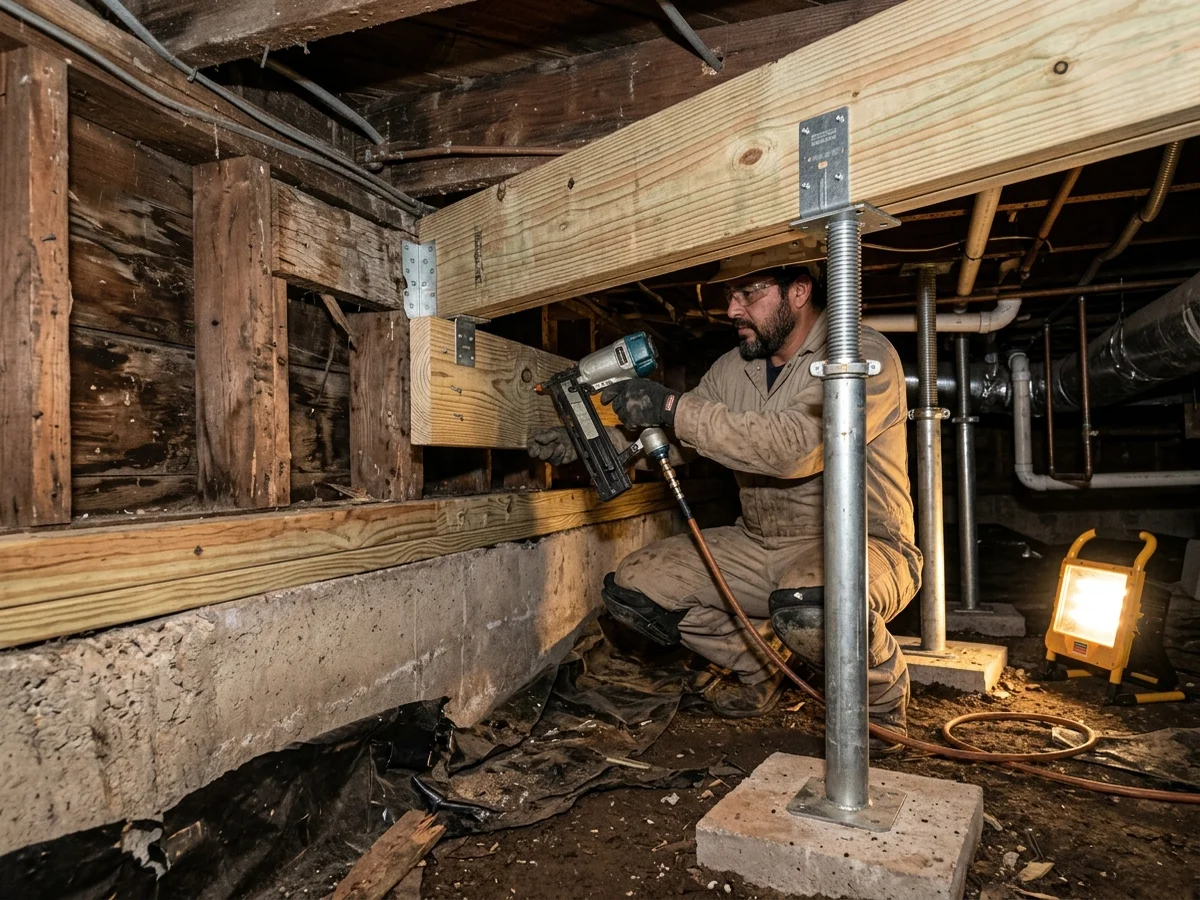
Wood rot timber restoration: chronic crawl space humidity rots floor joists and crushes wooden sill plates. Sistering new treated lumber and placing steel support jacks restores full load capacity.
Engineered Technologies
Crawl Space Repair & Encapsulation Solutions
Combining structural timber reinforcement with complete moisture barriers to protect framing, improve energy efficiency, and create a healthy living environment.
Crawl Space Encapsulation & Conditioning
Heavy-duty 12 to 20 mil reinforced vapor barrier, vent sealing, and commercial dehumidification
We line the entire crawl space earth and concrete stem walls with an antimicrobial reinforced vapor barrier, seal all seams airtight, close exterior foundation vents, and install a dedicated commercial dehumidifier to keep subfloor moisture permanently below 55 percent relative humidity.
Best Suited For:
Musty odors, damp subflooring, high indoor humidity, wood rot prevention, and pest exclusion.
Perforated French drain channels and airtight sump pump basins with dual discharge lines
For crawl spaces prone to groundwater pooling, we trench an interior perimeter perforated drainage channel embedded in clean washed gravel. Water is directed to an airtight sump pump basin equipped with a high-output pump and battery backup before it can wet the vapor barrier.
Best Suited For:
Standing water, ground seepage, wet foundation walls, and properties with high water tables.
Applied when groundwater pooling requires mechanical discharge
Method Comparison
Full Encapsulation vs. Thin Plastic Vapor Barrier vs. Open Vents
Comparing commercial sealed crawl space systems to outdated building practices and partial fixes.
Protection Factor
Full Encapsulation & Jacks
Thin 6-Mil Plastic Sheet
Traditional Open Vents
Ground barrier protection
12 to 20 mil reinforced antimicrobial liner sealed airtight up foundation walls
Thin 6-mil black plastic loosely laid on dirt with open unsealed edges
Uncovered bare dirt or deteriorated plastic allowing continuous evaporation
Humidity & mold control
Vents sealed and commercial dehumidifier maintains subfloor humidity under 55%
Open foundation vents allow humid summer air to condense continuously on framing
High relative humidity (80-100%) fosters active mold growth and wood-decay rot
Floor bounce & sag remedy
Paired with heavy-duty adjustable steel jacks on poured concrete footing pads
Addresses moisture only; leaves sagging beams and rotted timbers unsupported
Wood rot progressively worsens, causing joists to sag and doors to drag
Indoor air quality impact
Stops stack-effect contamination; delivers clean, dry, conditioned air to living areas
Musty odors and mold spores continue to rise freely into first-floor living rooms
Up to 50 percent of first-floor breathing air originates from damp crawl space
Long-term framing preservation
Timber moisture drops to stable 10-14%, permanently stopping fungal rot and decay
A comprehensive engineering workflow designed to stabilize framing, manage water, and seal your crawl space permanently.
1
Laser Elevation & Moisture Assessment
Our specialist crawls the subfloor to measure floor joist deflection with precision laser levels, test timber moisture content with digital meters, and identify standing water sources.
2
Debris Removal & Ground Grading
Old debris, rotted wood, and failed plastic are removed. The crawl space floor is raked, smoothed, and trenched for perimeter drainage where groundwater seepage is present.
3
Structural Jack & Footing Installation
We dig through loose crawl space topsoil to solid subgrade and pour steel-reinforced concrete footing pads. Commercial adjustable steel jacks are mounted beneath settling girders to level the floor.
4
Antimicrobial 20-Mil Liner Installation
A heavy-duty multi-ply reinforced vapor barrier is laid across the earth, run up foundation stem walls to the termite inspection line, and sealed airtight at every overlapping seam.
5
Airtight Vent & Rim Joist Air Sealing
Exterior foundation vents are permanently closed with insulated covers. Band joists and rim joist cavities are air-sealed to stop humid outdoor air infiltration completely.
6
Commercial Dehumidification & Conditioning
An energy-efficient, high-capacity crawl space dehumidifier is installed on a vibration-isolated mount, ensuring year-round automated humidity control below 55 percent.
Frequently Asked Questions
Questions About Crawl Space Repair & Encapsulation
Clear, practical answers regarding crawl space humidity, vapor barriers, support jacks, and air quality.
Why do homes in Nashville and Middle Tennessee suffer from damp crawl spaces?
Middle Tennessee experiences hot, humid summers combined with dense clay soils that hold high volumes of groundwater. When traditional crawl space vents are open, warm, humid outdoor air enters the cooler crawl space and condenses on cold air conditioning ducts and wooden framing. Saturated clay soil beneath the home also evaporates moisture continuously into the subfloor.
What is the difference between a basic vapor barrier and full crawl space encapsulation?
A basic vapor barrier is typically a thin 6-mil plastic sheet loosely laid over dirt, leaving foundation walls, piers, and vents open to moisture and air infiltration. Full encapsulation uses a heavy-duty 12 to 20-mil antimicrobial reinforced liner that covers the entire ground and seals up foundation walls. Vents are air-sealed, and a commercial dehumidifier actively controls moisture, creating a clean, dry, conditioned space.
How does crawl space encapsulation improve indoor air quality inside the house?
Due to the natural stack effect, warm air rising in your home pulls air upward from the crawl space through subfloor gaps, electrical chases, and plumbing penetrations. In an unsealed crawl space, up to 50 percent of the air you breathe on the first floor originates beneath the house. Encapsulation seals off soil gases, mold spores, and musty humidity, ensuring only clean, dry air enters your living space.
Can crawl space repair fix bouncy, uneven, or sagging floors?
Yes. Structural crawl space repair directly addresses the causes of floor deflection. By installing commercial-grade adjustable steel support jacks on poured concrete footing pads and sistering compromised timber joists, our technicians can gently raise settled carrying beams and permanently restore solid underfoot rigidity.
Should crawl space vents be open or closed in Middle Tennessee?
Modern building science confirms that crawl space vents should be permanently sealed in Middle Tennessee. Open vents allow humid summer air to flood into the crawl space, causing condensation, mold, and wood rot. In winter, open vents allow freezing air to chill plumbing pipes and cold floors. Sealing vents and conditioning the crawl space protects your foundation year-round.
What is the next step to get an engineered assessment of my crawl space?
Contact our team to schedule an on-site crawl space inspection. A specialist will crawl the subfloor, measure timber moisture levels, check for mold and wood rot, map floor elevations, and provide a clear, comprehensive plan to repair and protect your foundation.
Schedule an On-Site Crawl Space Inspection
Speak with a local crawl space structural specialist. We will measure your timber moisture levels, inspect floor framing and piers, and provide a customized engineering plan to stabilize and encapsulate your crawl space.