Foundation Crack Repair in Nashville & Middle Tennessee
Foundation cracks are structural clues about what is happening beneath and beside your home. Whether driven by Middle Tennessee expansive clay swell-shrink cycles, basement water pressure, or concrete curing shrinkage, we diagnose the true cause and seal cracks permanently using high-strength epoxy pressure injection and waterproofing polymers.
Surface caulking from a hardware store will quickly fail under water pressure. We employ engineered low-pressure injection and structural composite reinforcement.
Structural Epoxy Pressure Injection
High-strength resin bonding that restores monolithic concrete tensile capacity
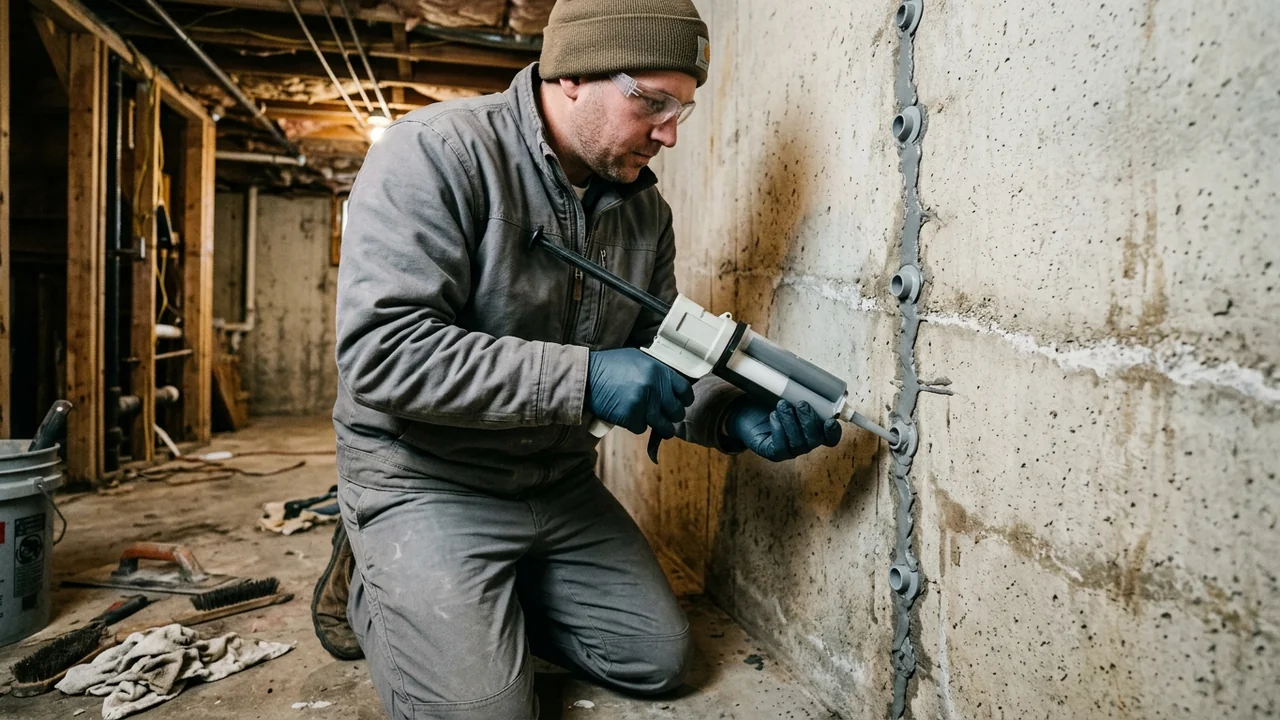
For poured concrete foundation walls with structural cracking, low-pressure epoxy injection fills the entire depth of the fissure from front to back. Once cured, the epoxy achieves a compressive and tensile strength up to three times stronger than original concrete, welding the wall back together.
Best Suited For:
Dry, non-leaking poured concrete cracks where restoring structural wall strength is required.
Expanding flexible barrier that seals against active groundwater leaks
When foundation cracks actively weep or leak during Middle Tennessee rainstorms, polyurethane injection is the ideal solution. Upon contact with water, the resin expands up to 20 times its original volume, forming a dense, flexible rubberized gasket that accommodates subtle thermal movement while stopping water completely.
Best Suited For:
Actively leaking basement or crawl space cracks where groundwater pressure forces moisture through the wall.
Applied based on on-site inspection findings
Carbon Fiber Crack Stitching
High-tensile composite reinforcement to prevent fracture widening
Where cracks experience tension or shear stress, high-modulus carbon fiber countersunk staples are installed crosswise into concrete. Epoxied flush into the foundation, these carbon stitches distribute lateral tensile loads and prevent the crack from spreading further.
Best Suited For:
Reinforcing fractured poured concrete or masonry walls against continued tension and separation.
Applied based on on-site inspection findings
Middle Tennessee Geotechnical Forces
Why Foundation Cracks Form Across Nashville & Middle Tennessee
Local soil composition is the leading driver of foundation cracking in our region. Saturated Middle Tennessee clay exerts massive pressure on basement and crawl space walls, while dry summer spells lead to soil shrinkage beneath footings.
Hydrostatic Pressure from Wet Clay
When winter and spring rains saturate Middle Tennessee clay, the soil expands and presses inward against basement walls. This pressure causes horizontal and stair-step mortar fractures.
Differential Settlement Cracks
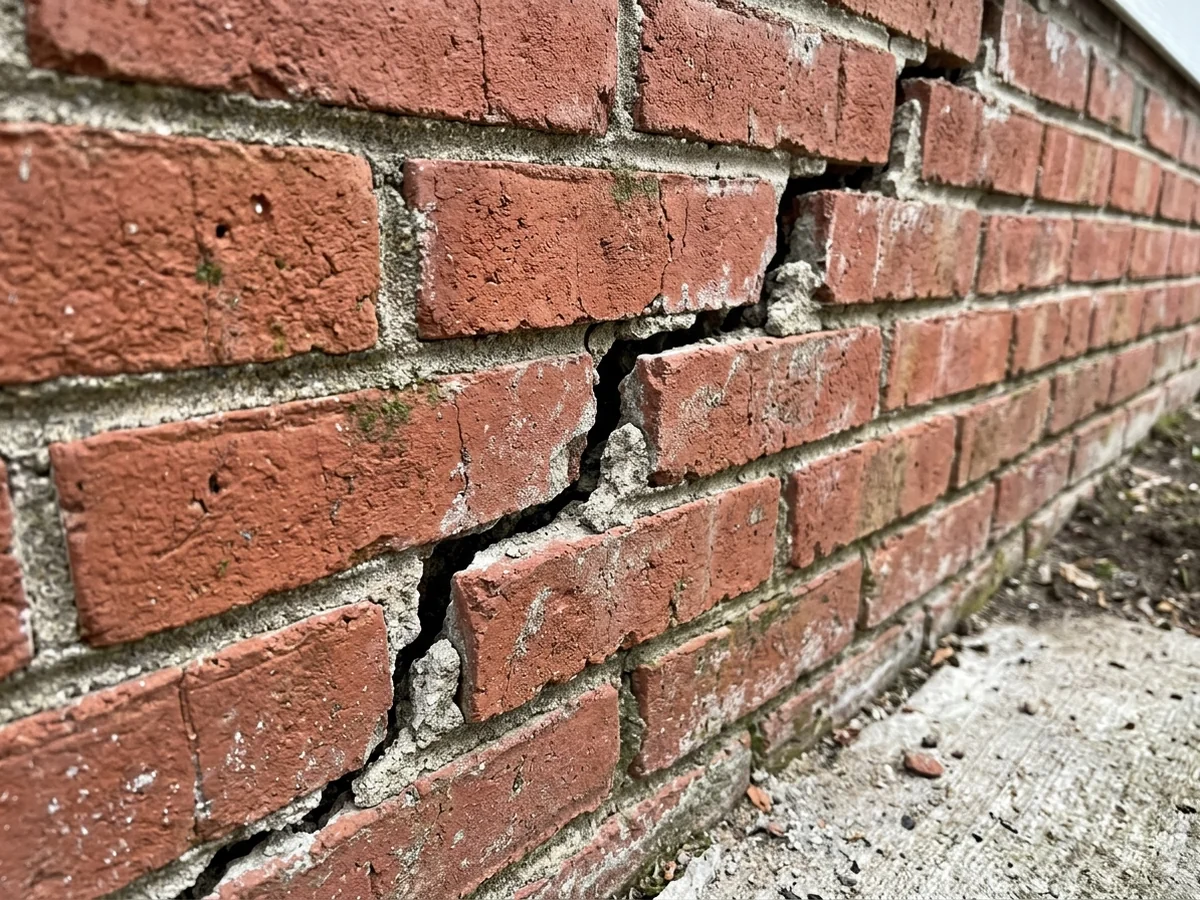
In late summer droughts, clay shrinks and pulls away from footings. As sections of the foundation settle downward into the void, diagonal stair-step cracks open along brick joints.
Stopping Water Infiltration Before Wood Rot
Even narrow cracks can channel groundwater into basements and crawl spaces, raising indoor humidity and threatening wood framing above. Professional sealing stops water entry permanently.
Exterior mortar line fracture: classic stair-step crack caused by clay soil shrinkage and footing settlement under a Middle Tennessee brick home.
The Injection Process
How Foundation Cracks Are Professionally Repaired
Low-pressure resin injection ensures full penetration from the front of the wall through to the exterior soil line.
1
On-Site Diagnostic Survey
We inspect the crack location, measure crack width with precision optical gauges, check for wall deflection or out-of-plumb movement, and determine if water is entering.
2
Surface Cleaning & Preparation
Technicians wire-brush and vacuum the crack surface to remove dust, efflorescence, and loose concrete, ensuring optimal bonding for the surface paste.
3
Injection Port Placement
Specialized plastic injection ports are anchored along the crack at spaced intervals matching the wall thickness, held in place by rapid-curing epoxy paste.
4
Surface Sealing
A high-strength epoxy paste cap is applied over the face of the crack between ports to contain the liquid resin under low injection pressure.
5
Sequential Pressure Injection
Epoxy or polyurethane resin is injected starting from the lowest port until it steadily flows out of the port above it, verifying complete crack penetration from inside to outside.
6
Port Removal & Final Clean
After the material cures fully, the protruding ports are cut flush with the wall surface and the area is smoothed for a clean finished appearance.
Comprehensive Structural Care
When Crack Repair Requires Underpinning or Wall Bracing
Crack sealing fixes the wall fracture. If your foundation is actively settling downward or bowing inward under soil pressure, sealing should be paired with deep piers or carbon fiber straps.
Practical answers to questions Middle Tennessee property owners have about wall cracks, leaks, and repair options.
How can I tell if a foundation crack is dangerous or just cosmetic?
Hairline vertical cracks under one-sixteenth of an inch in poured concrete are common shrinkage fissures that do not threaten structural safety, though they should be monitored. By contrast, horizontal cracks, stair-step cracks through brick mortar, cracks wider than one-quarter inch, and any crack accompanied by sticking doors or bowing walls require an immediate professional structural assessment.
What is the difference between epoxy and polyurethane crack injection?
Epoxy is a rigid structural adhesive used to bond fractured concrete walls back together, restoring load-bearing strength on dry walls. Polyurethane is a flexible, expanding foam resin designed specifically to stop water leaks. When polyurethane contacts moisture inside the crack, it expands into a watertight gasket that flexes with normal temperature changes.
Can I just patch a foundation crack myself with hydraulic cement or caulk?
Surface patches applied with a trowel only cover the outer surface of the wall. Because hydraulic cement does not penetrate the full thickness of the concrete, water pressure and natural thermal expansion will quickly push the patch loose. Professional low-pressure injection fills the entire crack cavity from front to back.
Why do brick foundation cracks in Middle Tennessee follow a stair-step pattern?
Brick and concrete block walls consist of individual masonry units joined by mortar. Mortar is naturally weaker in tension than the solid brick. When a corner footing drops due to drying clay soil underneath, the wall breaks along the path of least resistance, following the zigzagging horizontal and vertical mortar joints.
Will repairing a crack fix my foundation if the house is still settling?
Crack repair fixes the symptom by sealing the opening and restoring concrete continuity. However, if the footing beneath is actively sinking into shifting clay soil, the crack will simply re-open elsewhere. In cases of active settlement, crack repair should be combined with steel push piers or helical piers to stabilize the footing permanently.
How do I schedule an on-site foundation crack inspection?
Call our local office or request an inspection through our contact page. A foundation specialist will visit your property, inspect the crack pattern, measure floor elevations, and explain the exact repair method appropriate for your home.
Have a Foundation Crack Evaluated
Speak directly with a local foundation specialist. We will inspect your crack patterns, evaluate whether active movement is occurring, and provide clear, straightforward repair options with no sales pressure.