Epoxy Foundation Crack Repair in Nashville & Middle Tennessee
When a poured concrete foundation wall develops vertical or diagonal cracking, surface caulking leaves the interior void open to moisture and movement. Our low-pressure structural epoxy injection penetrates the full 8-to-10-inch thickness of the concrete, curing stronger than the original wall and restoring true load-bearing structural integrity without lawn excavation.
10,000+ PSI
Compressive strength
Full Depth
Front-to-back penetration
Zero Excavation
Interior basement access
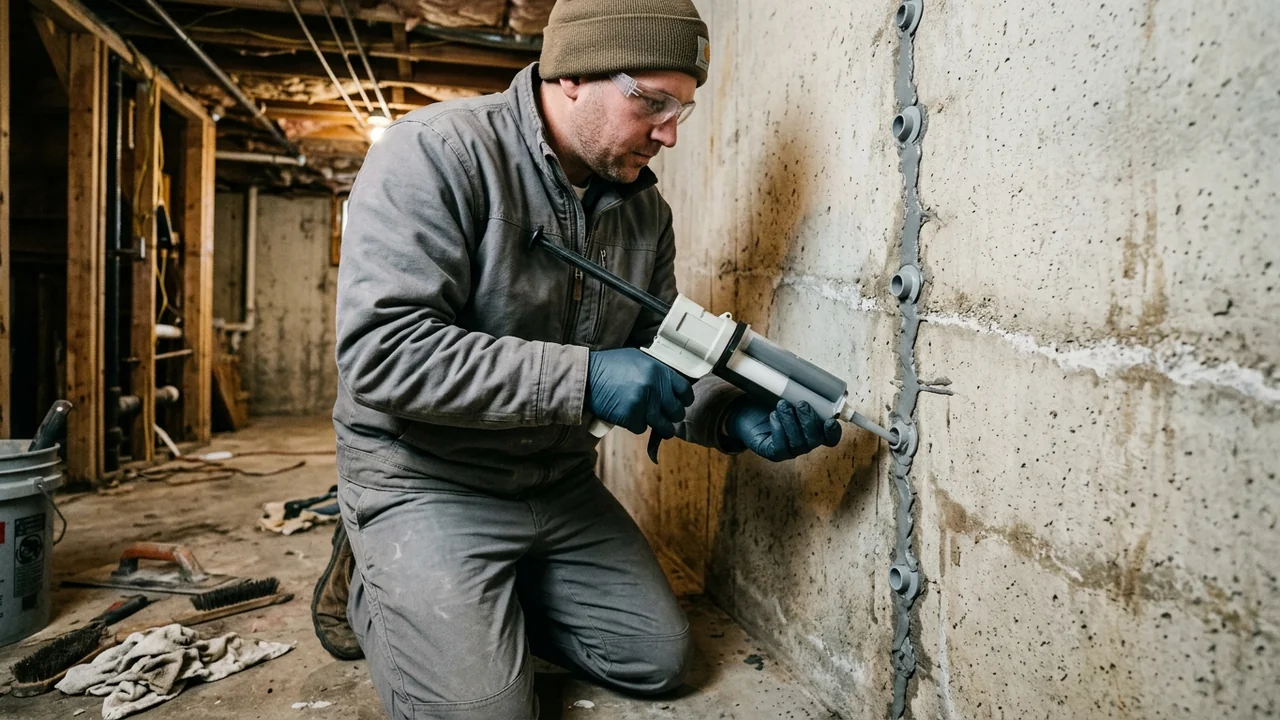
Why Structural Epoxy Restores Concrete Integrity
A foundation crack splits a monolithic concrete wall into separate, discontinuous sections. Structural epoxy injection chemically welds the split, restoring tensile load transfer across the joint.
Compressive Strength
10,000 to 12,000 psi
Exceeds standard 3,000 to 4,000 psi residential concrete
Tensile Bond Strength
2,500 to 4,000 psi
Concrete substrate fails before epoxy bond breaks
Crack Width Range
0.002 to 0.25 inches
Penetrates hairline fissures through full wall thickness
Injection Pressure
20 to 40 psi
Controlled low pressure ensures complete micro-cavity filling
The Principle of Monolithic Structural Bonding
Poured concrete foundations are designed as rigid monolithic beams that carry the vertical weight of your home while resisting lateral earth pressure from Middle Tennessee clay. When a shrinkage or settlement crack opens, the continuous load distribution is broken. Surface patches (such as silicone or hydraulic cement) only bridge the outer fraction of an inch, leaving the core compromised.
Low-pressure epoxy injection introduces an ultra-low-viscosity thermosetting polymer through surface ports. Under calibrated hydraulic pressure, the liquid resin fills micro-fissures down to two-thousandths of an inch wide, penetrating all the way to the exterior soil membrane. When the epoxy cross-links and cures, it achieves higher tensile and shear capacity than the original concrete, reunifying the wall.
Proven Tensile Performance
3x
Stronger in tension than standard residential poured concrete
Epoxy Injection vs. Polyurethane Foam Injection
Both materials are injected through foundation ports, but they serve completely different engineering functions. Understanding the difference ensures the right technology is applied to your foundation.
Primary objective
Structural Epoxy
Structural bonding to restore concrete compressive and tensile capacity
Polyurethane Foam
Flexible waterproofing gasket to stop active groundwater seepage
Cured physical state
Structural Epoxy
Rigid, high-strength structural polymer with 10,000+ psi compressive strength
Polyurethane Foam
Dense elastomeric closed-cell foam that expands up to 20 times its volume
Moisture conditions
Structural Epoxy
Best applied to dry or slightly damp concrete surfaces for optimal adhesion
Polyurethane Foam
Actively activated by water; can be injected into running leaks
Wall movement behavior
Structural Epoxy
Monolithic rigid seal designed for structurally stabilized foundation walls
Polyurethane Foam
Flexible matrix accommodates subtle thermal expansion and contraction
Foundation wall type
Structural Epoxy
Solid poured concrete walls with sealed cavities to maintain backpressure
Polyurethane Foam
Poured concrete walls, cold joints, and pipe penetrations
Load transfer restoration
Structural Epoxy
Full restoration; cured epoxy joint is stronger than surrounding concrete
Polyurethane Foam
No structural load restoration; functions strictly as a water barrier
Unsure which material matches your wall? An on-site diagnostic survey confirms moisture levels and structural movement.
The 6-Step Structural Epoxy Injection Process
Injecting epoxy requires meticulous surface preparation, calibrated port spacing, and sequential pressure delivery to guarantee full wall penetration.
Diagnostic Crack Evaluation
Our technician evaluates crack width, orientation, and moisture conditions, confirming the concrete is poured and verifying whether active structural movement is present.
Mechanical Surface Cleaning
The concrete surface along the crack is wire-brushed and vacuumed to remove loose aggregate, dust, and efflorescence, creating a clean bonding substrate.
Injection Port Placement
Specialized plastic injection ports are anchored directly over the crack at spaced intervals matching wall thickness (typically 8 to 10 inches apart).
Epoxy Surface Paste Capping
A high-strength rapid-curing epoxy paste is applied across the entire crack face between ports, forming an impermeable cap that contains the resin under pressure.
Sequential Pressure Injection
Liquid structural epoxy is injected under controlled low pressure starting from the bottom port. Injection continues until resin purges from the port above, ensuring front-to-back penetration.
Curing & Flush Port Removal
Once the epoxy cures into a solid structural weld, the protruding injection ports are cut flush with the wall face, leaving a neat and permanently bonded foundation surface.
Why Poured Concrete Walls Crack in Nashville Subdivisions
Modern homes built across Davidson, Williamson, Rutherford, and Wilson counties frequently feature poured concrete basement and crawl space walls. Local soil conditions make crack management critical.
Initial Concrete Curing Shrinkage
During hydration, newly poured concrete loses moisture and contracts slightly. When restrained by footings, vertical hairline fissures form naturally, creating pathways for groundwater.
High-Plasticity Clay Expansion
During heavy winter and spring rainfall, Middle Tennessee clay soil absorbs water and swells, exerting immense lateral pressure against basement walls and widening existing shrinkage fissures.
Permanent Restorative Sealing
Injecting high-tensile epoxy seals the fracture permanently, restoring the continuous concrete barrier before water can reach reinforcing rebar and cause interior corrosion.
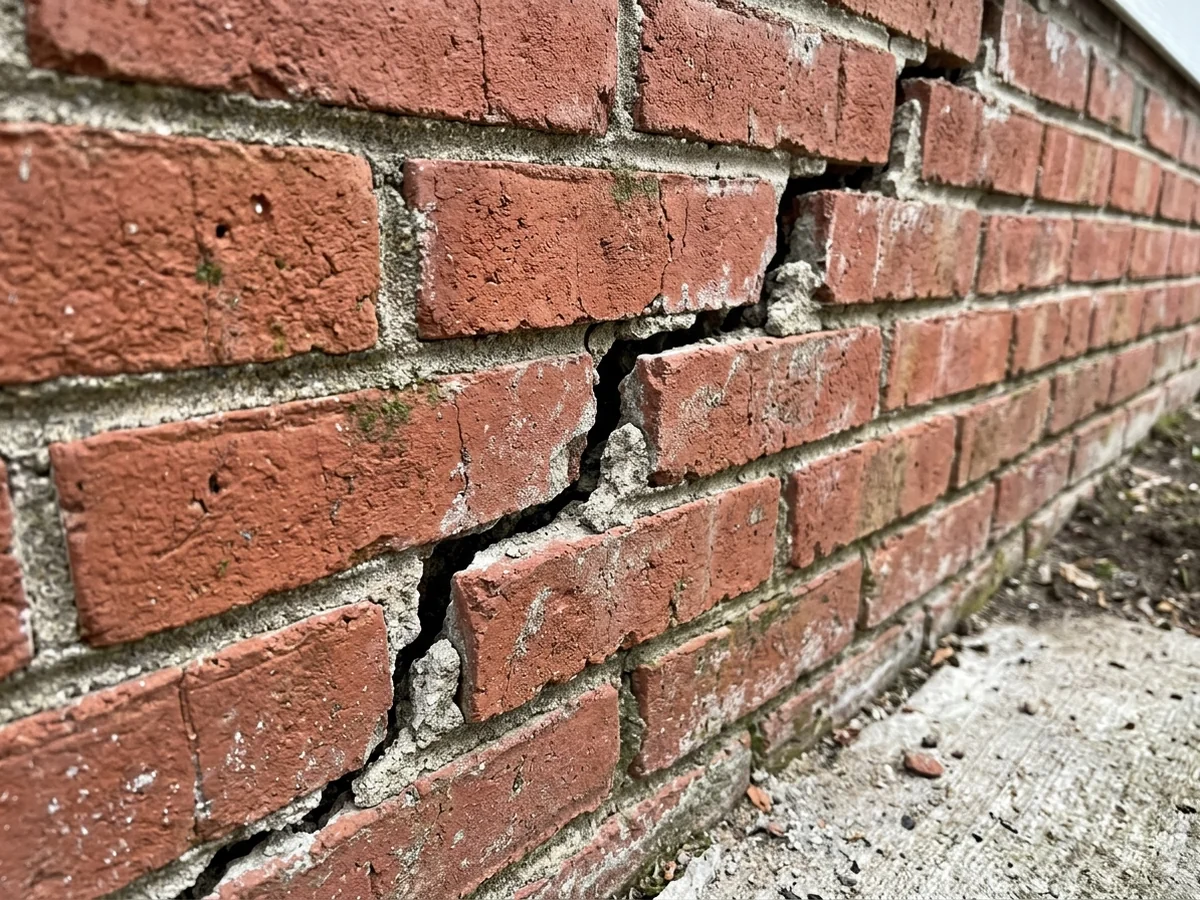
Complete Foundation Wall Solutions
Epoxy injection repairs cracks in poured concrete. If your wall is bowing inward or settling downward, explore our full array of structural underpinning and reinforcement technologies.
Questions About Epoxy Foundation Crack Repair
Clear answers to technical questions about epoxy resins, curing times, and foundation compatibility.
Schedule an On-Site Crack Repair Evaluation
Speak directly with an experienced Middle Tennessee foundation specialist. We will inspect your poured concrete wall, evaluate crack depth and moisture levels, and provide clear technical recommendations with no high-pressure sales tactics.