Earth Wall Anchor Systems in Nashville & Middle Tennessee
When lateral hydrostatic pressure causes basement walls to bow more than two inches or tip inward at the top plate, earth wall anchors provide the highest stabilizing and straightening force available. By anchoring deep into undisturbed yard soil beyond the foundation backfill, wall anchors permanently stop inward movement and allow controlled straightening over time.
2+ Inches
Deflection Handling
Engineered for advanced bowing and tipping walls
Adjustable
Straightening Power
Incremental tightening pulls walls back to plumb
10 to 15 Feet
Anchor Distance
Anchors into undisturbed virgin yard soil
Heavy Galvanized
Steel Construction
Resists corrosion in subterranean clay soils
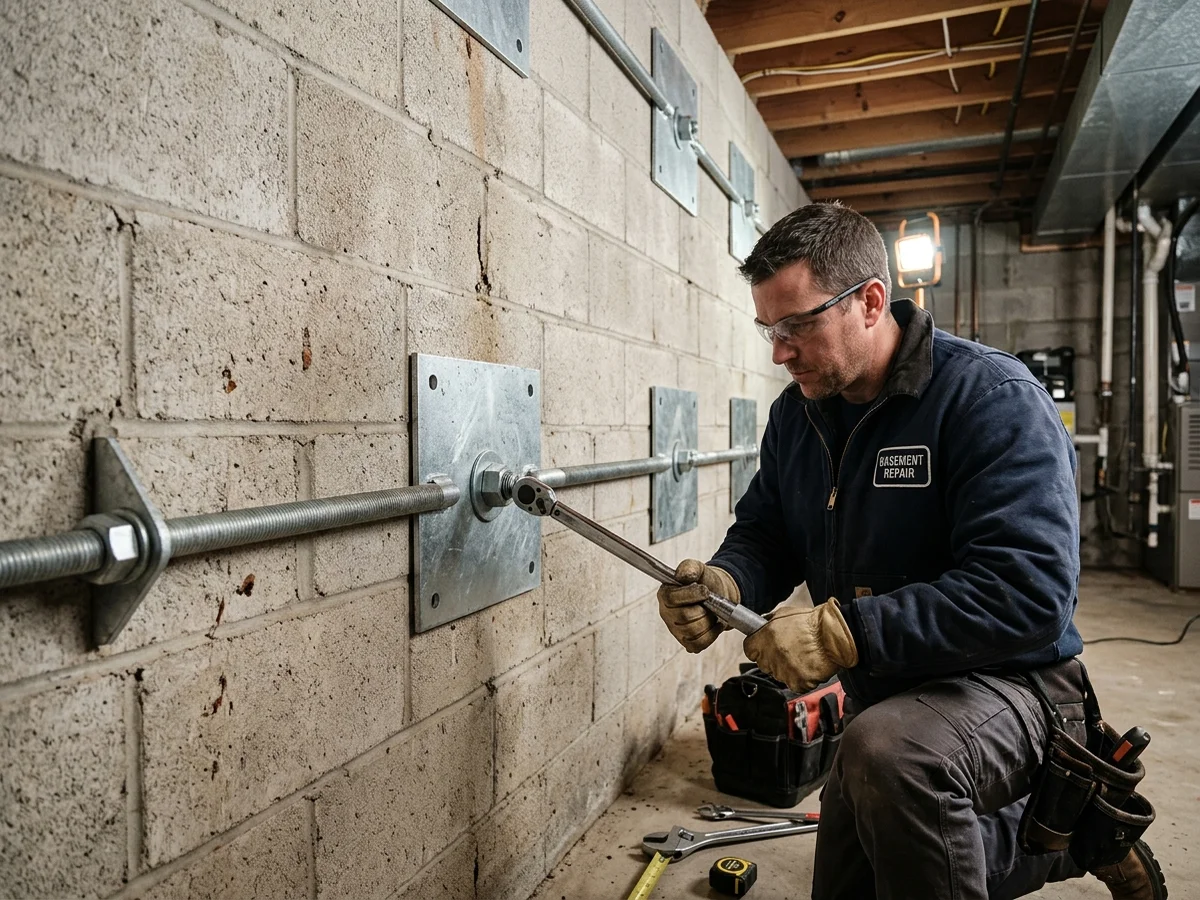
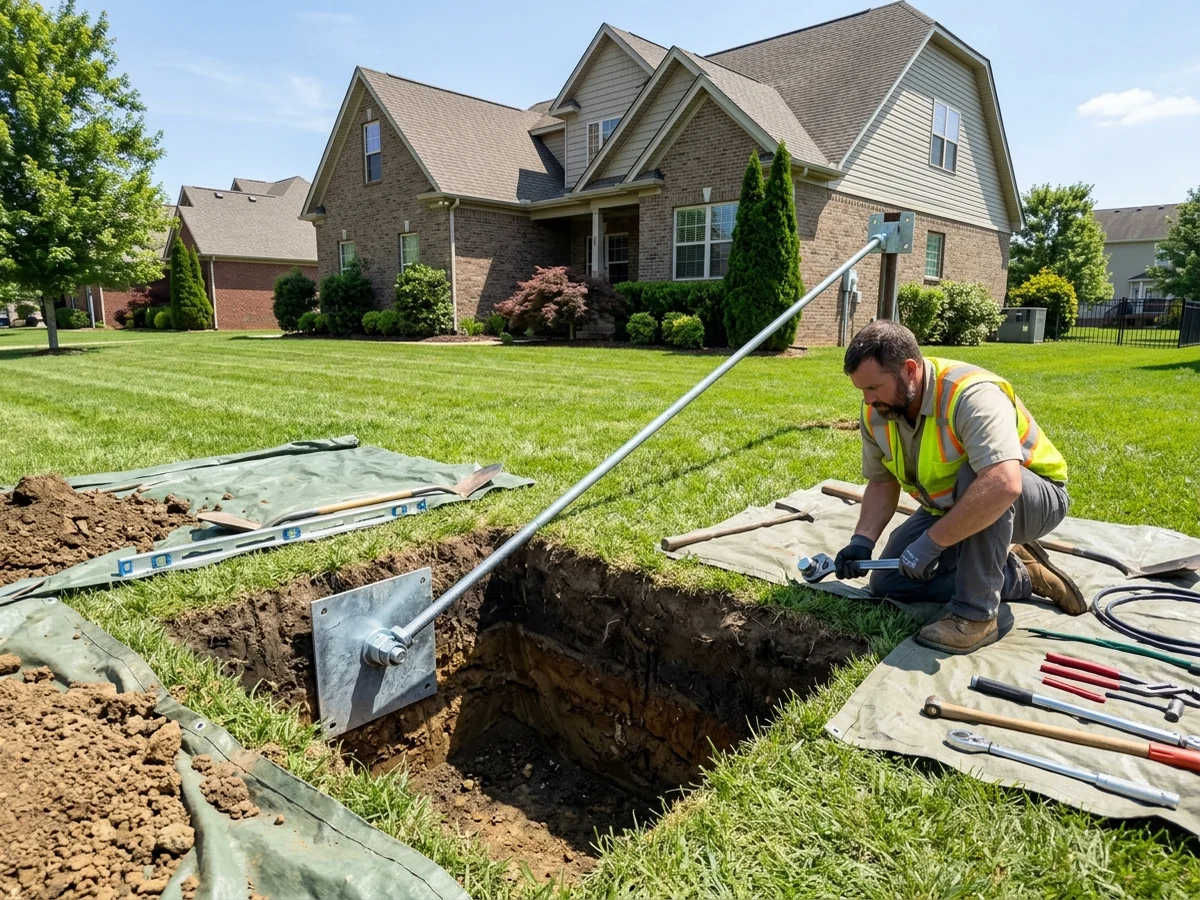
How Earth Anchors Counter Lateral Soil Pressure
Middle Tennessee clay expands with thousands of pounds of pressure against basement walls. Earth anchors leverage the unyielding resistance of virgin yard soil to neutralize these destructive lateral forces.
Virgin Soil Bearing
The earth anchor plate is placed 10 to 15 feet out in undisturbed, hard-packed clay. This virgin soil remains stable and does not move with the active backfill zone beside the basement.
High Clamping Distribution
Large interior steel plates spread tension across multiple block courses or poured concrete sections, preventing localized stress cracks and reinforcing structural continuity.
Incremental Straightening
When clay shrinks during dry summer periods, tightening the interior nuts draws the wall back toward vertical plumb, closing horizontal fracture gaps over successive seasons.
Bypassing the Active Backfill Soil Wedge
When homes are constructed, the excavated perimeter is filled with loose backfill soil that absorbs water easily and exerts intense hydrostatic pressure during wet Nashville winters.
Deep Yard Placement
Earth anchor plates are buried beyond the failure wedge in dense, undisturbed soil that has had centuries to consolidate, providing an unyielding external anchor point.
Continuous Threaded Steel Rods
High-strength steel rods connect the yard plate to the interior wall plate. The rods are driven through small drilled holes with zero trenching across your lawn.
Turf Preservation Guarantee
Our crews lay tarps, neatly cut sod squares, excavate small plate holes, and replace the turf upon completion, leaving your lawn and landscaping clean and intact.
Wall Anchors vs. Carbon Fiber Straps vs. Steel I-Beams
Selecting the appropriate wall repair system depends on deflection severity, wall tipping, yard clearance, and whether you plan to finish the basement.
Yard-Anchored Mechanical Straightening
Best for inward deflection over two inches, inward tipping at the top plate, and homes with open yard space where pulling the wall back to plumb over time is desired.
Zero-Excavation Interior Composite
Best for early-to-moderate bowing under two inches, tight property lines, obstructed yards, and finished basements where maintaining flush walls is essential.
Is your basement wall deflected less than two inches?
Learn how zero-excavation carbon fiber straps bond flush to the concrete face to permanently stop movement.
The Wall Anchor Installation Sequence
A systematic engineering workflow designed to secure structural stability while safeguarding lawn and property.
Laser Deflection & Yard Clearance Survey
Our technician measures maximum inward wall curvature and maps exterior yard space, verifying that at least 10 to 15 feet of open ground is available free of buried utilities and easements.
Wall Coring & Rod Driving
Small holes (approximately 1.5 inches) are drilled through the foundation wall at engineered intervals. High-strength threaded steel anchor rods are driven horizontally through the soil toward the yard.
Exterior Anchor Plate Placement
A compact access hole is hand-excavated in the lawn 10 to 15 feet from the home. A heavy-gauge galvanized earth plate is buried vertically in deep, undisturbed soil strata.
Interior Clamping Plate Mounting
A heavy-duty steel wall plate is mounted over the threaded rod on the inside face of the basement wall, distributing clamping force across concrete blocks or poured concrete.
Calibrated Torque Tensioning
Technicians install high-strength hex nuts and tighten the system with calibrated torque wrenches, applying immediate stabilization force and locking the wall against lateral soil loads.
Neat Backfilling & Turf Restoration
Exterior soil is backfilled and tamped in layers, and the original sod sections are neatly set back in place. Homeowners receive guidance on incremental summer tightening schedules.
Complete Basement & Foundation Wall Repair Overview
Earth wall anchors are part of our comprehensive basement wall stabilization services. Explore overall shear indicators, hydrostatic pressure relief, and Middle Tennessee service areas.
Questions About Basement Wall Anchor Systems
Practical answers regarding earth anchor installation, yard requirements, and wall straightening.
Request an On-Site Wall Anchor Evaluation
Speak with a local foundation specialist. We will measure your wall deflection, assess exterior yard clearance, and explain how earth wall anchors can stabilize and restore your foundation walls.
Serving communities throughout Middle Tennessee: