Polyurethane Foam Slab Foundation Repair in Nashville & Middle Tennessee
Polyurethane foam lifting (also known as polyjacking) is the modern, non-invasive standard for leveling sunken residential concrete slab foundations. Injected through discrete penny-sized ports, high-density geotechnical foam expands to fill subterranean voids, compacts loose soil, and lifts settled interior floors back to millimeter precision with zero demolition.
5/8 Inch
Port Diameter
Penny-sized holes drilled in grout lines or floor seams
3 to 5 lbs/cu ft
Polymer Weight
Ultra-lightweight; adds no downward overburden to weak soil
6,000 to 14,000 psf
Compressive Strength
Heavy-duty load-bearing capacity for residential structures
15 Minutes
Curing Time
Achieves 90 percent capacity for immediate room use
How Expanding Polyurethane Restores Sunken Slabs
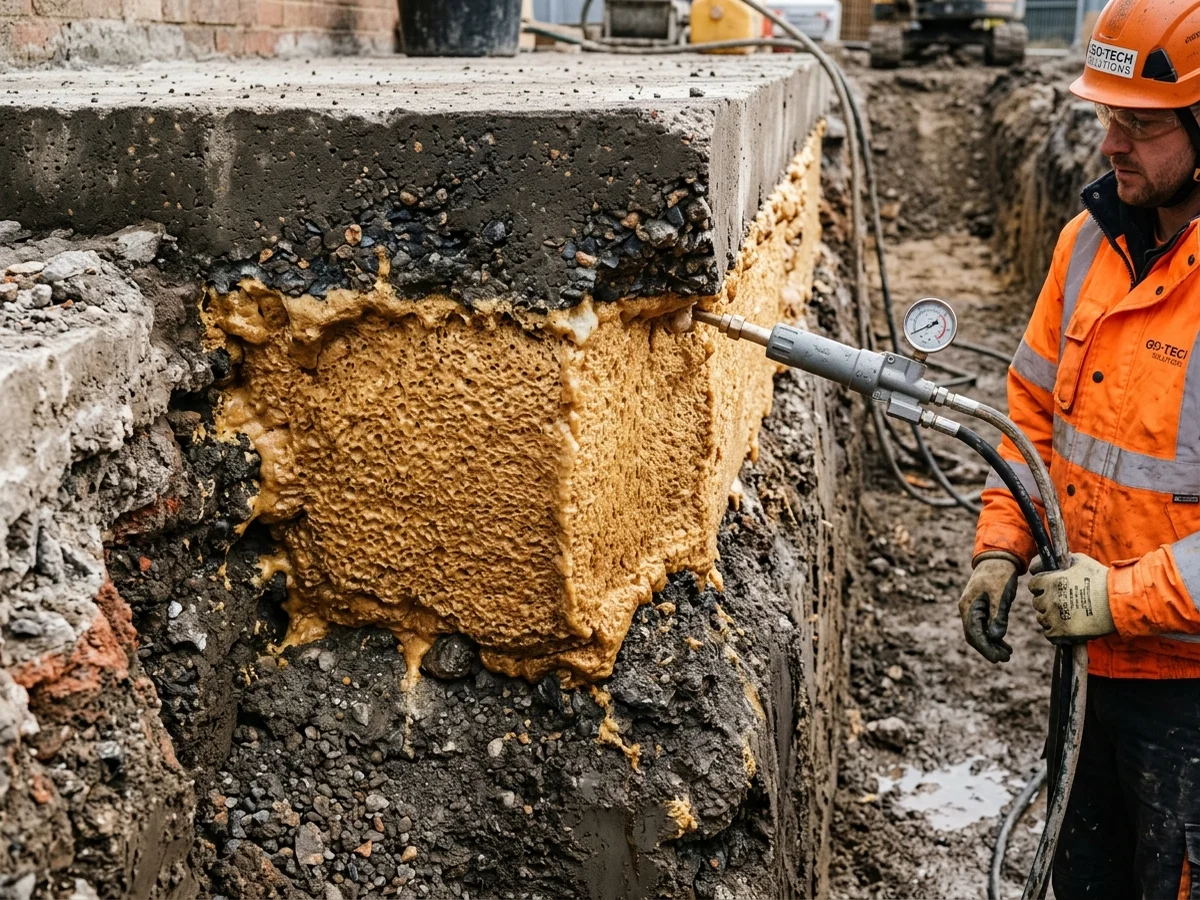
Unlike traditional heavy cement slurries, structural geotechnical polyurethane works through controlled expansion physics to densify loose sub-base soil and generate uniform vertical lift.
360-Degree Void Expansion
As the liquid components react, the polymer expands outward in all directions, penetrating deep into soil fissures and gravel voids that thick concrete slurries can never reach.
Subgrade Soil Densification
Before the slab begins to lift, the expanding foam compresses loose topsoil and unconsolidated fill, creating a stable, dense subgrade foundation that resists future settlement.
Immediate 15-Minute Cure
The chemical reaction achieves 90 percent of its structural compressive capacity in just 15 minutes. Homeowners can immediately walk across the floor and replace furniture without waiting days for drying.
Eliminating Subterranean Caverns Beneath Living Areas
When soil washes out or shrinks, a concrete slab acts like an unsupported bridge. Without dense subgrade contact, normal furniture and foot traffic eventually cause the concrete to fracture and cave inward.
Hydro-Insensitive Polymer Chemistry
Our geotechnical foam formulation is completely hydrophobic. It cures effectively even in the presence of groundwater or plumbing dampness, displacing water without diluting or eroding.
Zero Surcharging on Fragile Soils
Weighing roughly 4 pounds per cubic foot, poly foam adds negligible weight to the ground. In contrast, mudjacking pumps hundreds of pounds of wet mortar, frequently triggering new settlement.
Micro-Drilling Floor Preservation
Injection ports measure only 5/8 of an inch, about the size of a penny. Holes can be drilled through ceramic tile grout lines or discreet corners, preserving finished floor coverings.
Polyurethane Foam vs. Mudjacking vs. Steel Push Piers
Comparing geotechnical polymer lifting to traditional slurry mudjacking and bedrock-driven underpinning.
Lightweight Interior Polymer Injection
Best for sunken interior residential floors, garage slabs, void filling beneath finished rooms, and scenarios where preserving existing tile or flooring without heavy mess is required.
Bedrock-Driven Structural Underpinning
Best for exterior load-bearing grade beams, perimeter masonry settlement, and homes where the entire foundation structure must be anchored down to solid limestone bedrock.
Need an overview of concrete slab foundation diagnostics?
Explore overall slab-on-grade failure symptoms, Middle Tennessee clay settlement, and underpinning options.
The Polyurethane Foam Lifting Process
A precise, clean engineering procedure designed to restore floor elevations with zero household disruption.
Precision Laser Elevation Grid
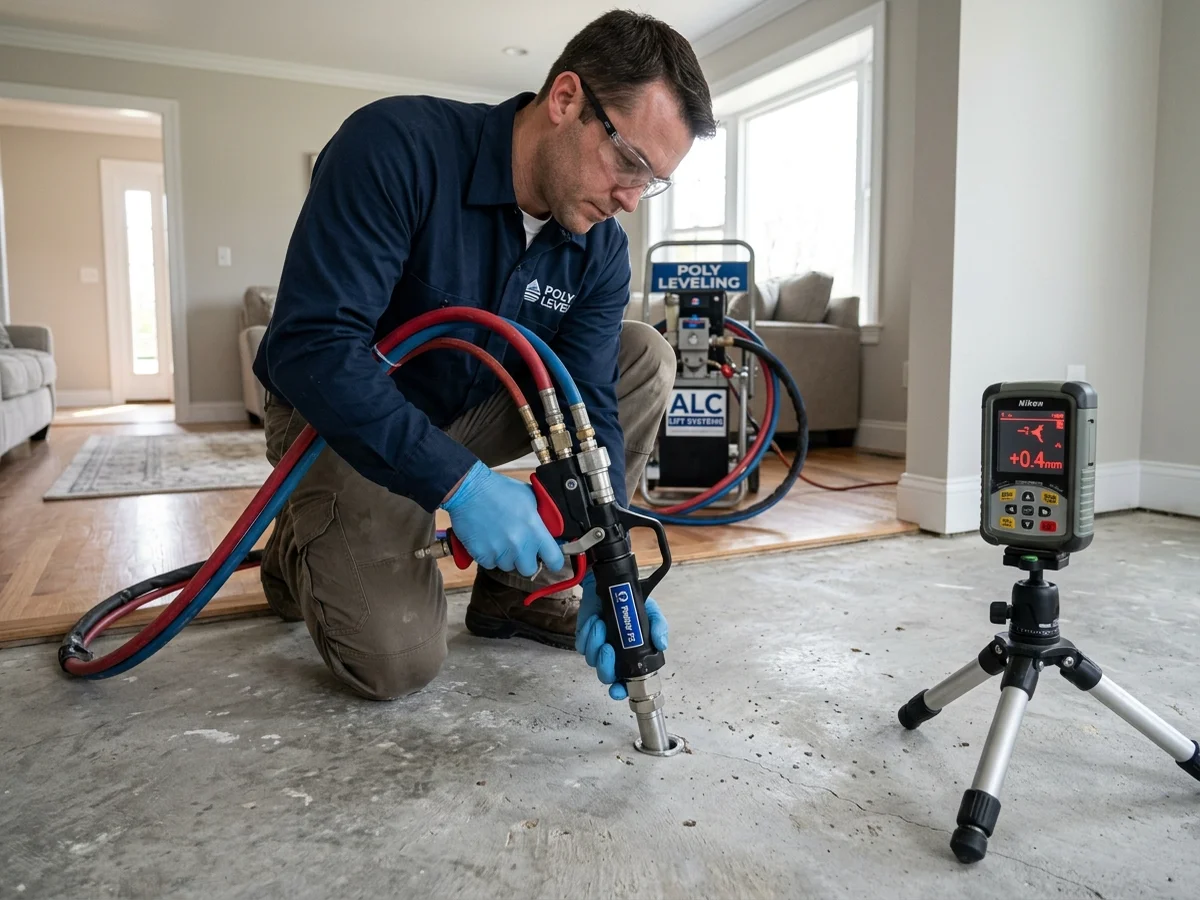
Our technician establishes a room-by-room laser elevation benchmark, taking elevation measurements across the entire floor to calculate the exact settlement contour down to the millimeter.
Discrete 5/8-Inch Port Drilling
Small 5/8-inch ports (penny-sized) are drilled through the concrete floor at engineered injection points. In finished rooms, ports are carefully located in tile grout joints or carpet tuck edges.
Mechanical Port Placement
Tapered brass or composite mechanical injection ports are seated into the drilled holes, creating an airtight seal that directs high-pressure expanding polymer straight into the sub-slab void.
Controlled Geotechnical Foam Injection
Dual heated hoses deliver liquid polyol and isocyanate to the injection gun. As the components mix, the resin expands with thousands of pounds of upward force, consolidating sub-base soil and filling voids.
Real-Time Laser Lift Monitoring
Continuous laser receivers and digital dial gauges monitor the slab elevation in real time. Technicians inject in controlled bursts, raising the settled floor smoothly back to its level position.
Port Removal & Mortar Patching
Injection ports are tapped out, and drill holes are patched flush with high-strength non-shrink cement or color-matched tile grout. The area is vacuumed clean, and normal room use resumes immediately.
Questions About Polyurethane Foam Foundation Repair
Technical, practical answers regarding polyjacking injection, floor preservation, and long-term durability.
Request an On-Site Polyurethane Foam Assessment
Talk directly with a local foundation specialist. We will measure your floor elevation with precision laser sensors, locate subgrade void spaces, and explain how expanding polyurethane foam can restore your sunken concrete slab foundation.
Serving communities across Middle Tennessee: