Polyurethane Foam Concrete Lifting vs Mudjacking: Pros, Cons, and Durability
Sunken concrete slabs on driveways, walkways, patios, and pool decks create unsightly trip hazards, cause water to pool toward foundation walls, and diminish curb appeal. For decades, traditional mudjacking was the only alternative to expensive concrete replacement. Today, high-density polyurethane foam injection (polyjacking) has transformed the concrete repair industry.
Nashville Foundation Experts Engineering Team
Structural Foundation & Geotechnical Specialists
Direct Answer / Key Engineering Takeaway
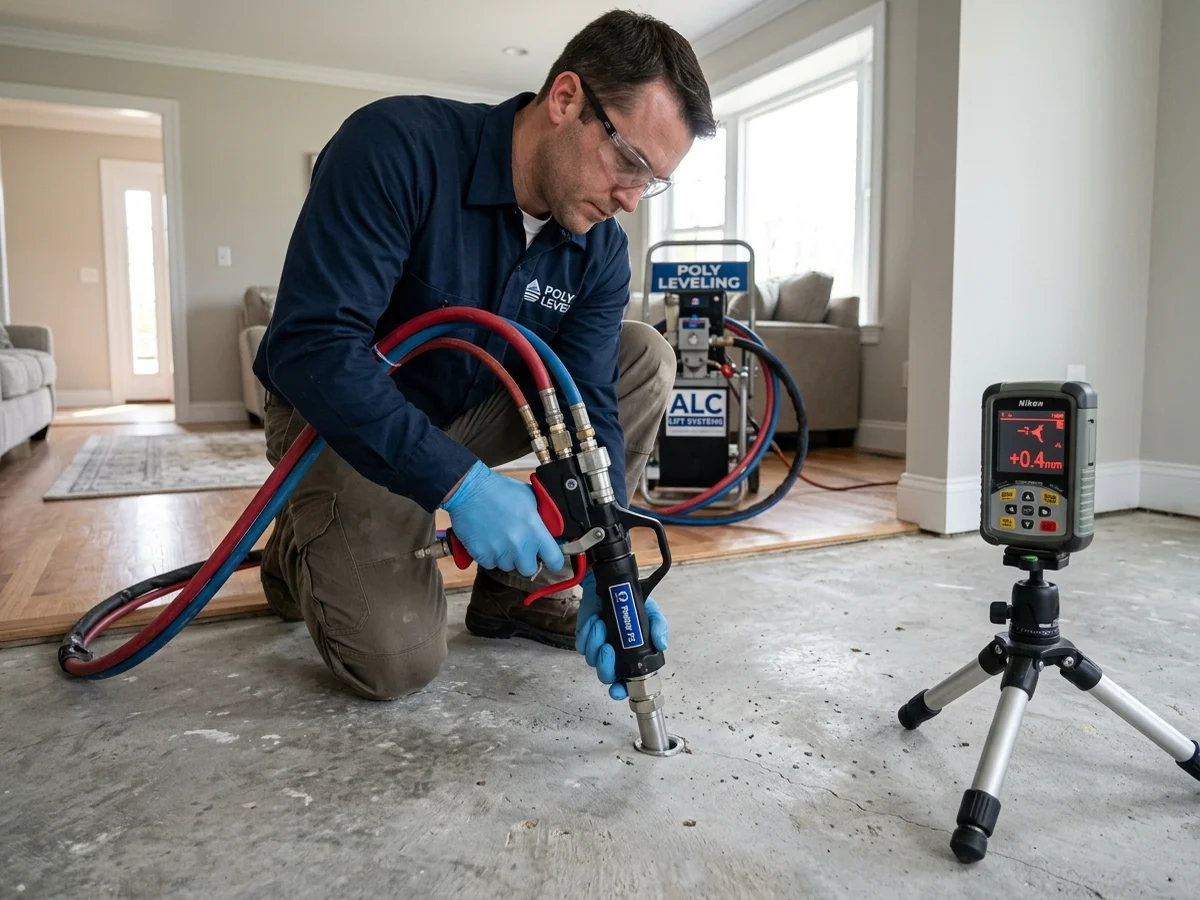
Polyurethane foam concrete lifting (polyjacking) outperforms traditional mudjacking in weight, longevity, drill hole size, and moisture resistance. While mudjacking pumps a heavy cement and dirt slurry weighing 100 to 120 pounds per cubic foot through large two-inch holes, polyurethane foam weighs only two to four pounds per cubic foot and is injected through tiny five-eighths-inch penny-sized ports. Polyurethane cures within 15 minutes, expands to fill sub-slab voids, and is completely hydrophobic, meaning groundwater cannot wash it away.
Why Concrete Slabs Settle and Sink Over Time
Subgrade erosion, poor compaction, and reactive Middle Tennessee soils.
Concrete slabs are only as stable as the soil beneath them. When driveways, garage aprons, and patios are poured, the soil beneath them must support the heavy weight of the concrete plus any vehicles or pedestrian traffic.
In Middle Tennessee, three primary factors trigger concrete settlement:
1. Inadequate Backfill Compaction: During home construction, trenches dug for plumbing lines and foundation footings are often backfilled with loose clay that settles naturally over the first 5 to 10 years.
2. Sub-Slab Soil Erosion: Misdirected roof downspouts and plumbing leaks wash fine soil particles away from beneath slabs, creating hollow subterranean voids.
3. Clay Shrinkage Cycles: Summer drought conditions shrink expansive clay soils, pulling support from beneath exterior flatwork and allowing heavy concrete slabs to crack and drop.
How Traditional Mudjacking Works and Its Limitations
Heavy cementitious slurries and oversized injection holes.
Traditional mudjacking (also called slabjacking) involves pumping a mixture of water, topsoil, sand, and Portland cement beneath settled concrete to force the slab upward.
While mudjacking has been used for decades, it carries significant physical drawbacks:
Oversized Core Holes: The heavy slurry requires drilling large holes, typically 1.5 to 2 inches in diameter (the size of a soda can), across the concrete surface. Even after being patched with mortar, these large circular scars remain visible.
Massive Added Weight: Mudjacking slurry weighs between 100 and 120 pounds per cubic foot. Pumping thousands of pounds of heavy wet mud onto soil that has already proven incapable of supporting the slab frequently causes re-settlement within two to three years.
Vulnerability to Water Washout: Because mudjacking slurry is water-based and porous, ongoing groundwater flow and downspout runoff can wash the material away over time, recreating the underlying void.
Polyurethane Foam Injection (Polyjacking): The Modern Standard
Lightweight, expanding closed-cell polymers for permanent stabilization.
Polyurethane concrete leveling utilizes a closed-cell structural geopolymer. Two liquid components are mixed at the injection gun and pumped beneath the concrete under low pressure.
Within seconds, the liquid undergoes a chemical reaction, expanding into a dense structural foam that flows into microscopic soil voids, compacts loose subgrade soils, and gently lifts the concrete slab back into alignment with precision accuracy.
Tiny Injection Holes: Polyurethane requires drill holes only 5/8-inch in diameter (the size of a penny). Once patched with color-matched cement, these ports blend seamlessly into the concrete texture.
Extremely Lightweight: High-density polyurethane weighs only 2 to 4 pounds per cubic foot, less than three percent of the weight of mudjacking slurry. It lifts the slab without adding overburden weight to fragile underlying soils.
Hydrophobic and Moisture Impervious: Closed-cell polyurethane is completely waterproof. It will not break down, rot, or wash away in wet conditions, creating an impenetrable sub-slab moisture barrier.
Head-to-Head Comparison: Polyurethane vs Mudjacking
A detailed breakdown of performance, curing, and aesthetics.
Reviewing the engineering characteristics highlights why polyurethane has become the industry standard for residential flatwork restoration.
Performance Comparison: Polyurethane Foam vs Mudjacking
| Feature / Metric | Polyurethane Foam (Polyjacking) | Traditional Mudjacking |
|---|---|---|
| Drill Hole Diameter | 5/8 inch (penny size, discreet) | 1.5 to 2.0 inches (soda can size, visible scars) |
| Material Weight | 2 to 4 lbs per cubic foot (lightweight) | 100 to 120 lbs per cubic foot (heavy deadweight) |
| Cure Time to Full Use | 15 minutes (driveway usable immediately) | 24 to 48 hours before vehicle parking |
| Moisture & Water Resistance | 100% waterproof hydrophobic closed-cell foam | Susceptible to water erosion and breakdown |
| Void Filling Precision | Expands into tight voids and compacts base soil | Thick slurry travels unevenly; can miss voids |
| Expected Lifespan | Permanent; does not degrade in soil | Typically requires re-leveling in 2 to 5 years |
When Can Concrete Be Levelled vs When Must It Be Replaced?
Assessing slab integrity before choosing a repair path.
Concrete leveling is highly effective and significantly less disruptive than full demolition and re-pouring, but it is not suitable for every damaged slab:
Ideal Candidates for Polyurethane Leveling: Slabs that are intact or broken into two to three large sections that have settled unevenly; sidewalks with trip hazards; sunken pool decks with perimeter voids; and driveways sloping toward garage doors.
When Concrete Replacement Is Required: Slabs that are pulverized into spiderwebbed gravel; concrete with extensive surface spalling and crumbling; or slabs poured on unstable organic topsoil with active underground sinkhole activity.
Frequently Asked Questions
Need An On-Site Structural Evaluation?
Speak directly with an experienced Middle Tennessee foundation specialist. We will discuss the symptoms you are observing and perform an on-site laser level elevation survey with zero travel fees.