Slab Foundation Repair in Murfreesboro, TN
Murfreesboro master-planned subdivisions face distinct slab-on-grade foundation settlement caused by uncompacted cut-and-fill soil consolidation, summer smectite clay desiccation, and subterranean void formation. We provide precision high-density polyurethane foam lifting (polyjacking), sub-slab void grouting, and bedrock steel push pier underpinning across all five Murfreesboro ZIP codes.
Polyfoam
High-density lifting
5/8-Inch
Micro injection ports
Zero
Travel fees in 371XX
Bedrock
Steel push piers
Why Concrete Slabs Settle in Murfreesboro Subdivisions
Modern slab-on-grade homes in Rutherford County interact directly with cut-and-fill subgrades and reactive smectite clay. When underlying moisture levels fluctuate, structural settlement follows.
Cut-and-Fill Subdivision Grading
Settlement FactorThousands of single-family homes in Blackman, Overall Creek, and Barfield were constructed over rolling terrain that required deep earthmoving. When non-native or clay fill dirt was placed without moisture monitoring or mechanical compaction to full engineering standards, it settles unevenly beneath structural dead weight.
Native Smectite Clay Desiccation
Settlement FactorRutherford County subsoils contain high-plasticity clay minerals that undergo dramatic volume reduction during prolonged Middle Tennessee summer heatwaves. As perimeter clay shrinks away from the foundation footprint, concrete grade beams lose load-bearing support, dropping corners and exterior walls.
Subterranean Void Formation
Settlement FactorWhen underlying fill subsides or water washes away fine aggregate beneath an interior slab, the concrete is left bridging empty space. Without soil contact, the slab bows under living room furniture, kitchen islands, and partition walls until stress fractures open along the floor plane.
Under-Slab Plumbing Leak Erosion
Settlement FactorPressurized water supply lines or sewer drains cast directly into monolithic slabs can develop minor leaks. In Rutherford County clay soils, localized water infiltration liquefies compacted fill, creating hidden subterranean washouts that trigger sudden localized slab drops.
Warning Signs Your Murfreesboro Slab Has Settled
Because slab foundations are covered by finished flooring, early structural movement often reveals itself through interior trim, doors, and sheetrock before major cracks become visible.
Interior Partition Wall Gaps
Baseboards separating from hardwood or carpet surfaces, leaving visible gaps beneath interior walls as the concrete slab drops downward.
Diagonal Drywall Header Fractures
Stair-step or diagonal cracks radiating from the top corners of interior doorways and window frames where structural framing is distorted.
Binding or Out-of-Square Doors
Bedroom, bathroom, or closet doors that stick against the jamb, swing open on their own, or refuse to latch due to frame rotation.
Cracked Ceramic Tiles Along Joint Lines
Floor tiles fracturing across continuous lines in kitchens, entry foyers, and bathrooms, indicating differential deflection in the sub-slab.
Sloping or Uneven Finished Floors
A noticeable roll or dip underfoot across living spaces, or balls rolling across hard surfaces toward the center of the room.
Hollow Drumming Sound Underfoot
Tapping or walking across settled flooring produces a distinctive hollow echo where the concrete has detached from underlying fill soil.
Dual-Approach Slab Foundation Stabilization
Depending on whether settlement is isolated to interior floor panels or affects the load-bearing perimeter grade beam, we engineer a tailored restoration plan.
Related Murfreesboro & Slab Repair Resources
Navigate between our technical engineering guides and regional service hubs across Middle Tennessee.
Murfreesboro Service Area Overview →
Complete guide to foundation repair across all 5 Murfreesboro ZIP codes, neighborhoods, and soil conditions.
Sister SpokeConcrete Leveling in Murfreesboro →
Precision polyfoam raising for sunken driveways, sidewalks, patios, and garage aprons in Rutherford County.
Pillar HubSlab Foundation Repair Guide →
Comprehensive technical guide to slab settlement symptoms, engineering methods, and void filling options.
Murfreesboro Slab Foundation FAQs
Clear, practical answers about slab settlement, void filling, and polyjacking from local structural specialists.
Why do so many slab-on-grade homes in Murfreesboro develop settlement issues?
Murfreesboro has experienced unprecedented residential development over the last thirty years. To build large master-planned communities like those along Fortress Boulevard and Veterans Parkway, developers had to cut hills and fill natural drainage swales. When deep fill dirt is placed quickly without strict compaction control, the loose subgrade gradually consolidates under the heavy weight of the home over three to fifteen years. Middle Tennessee summer droughts accelerate this movement by shrinking native clay beneath the fill.
How does high-density polyurethane foam lifting work for interior residential slabs?
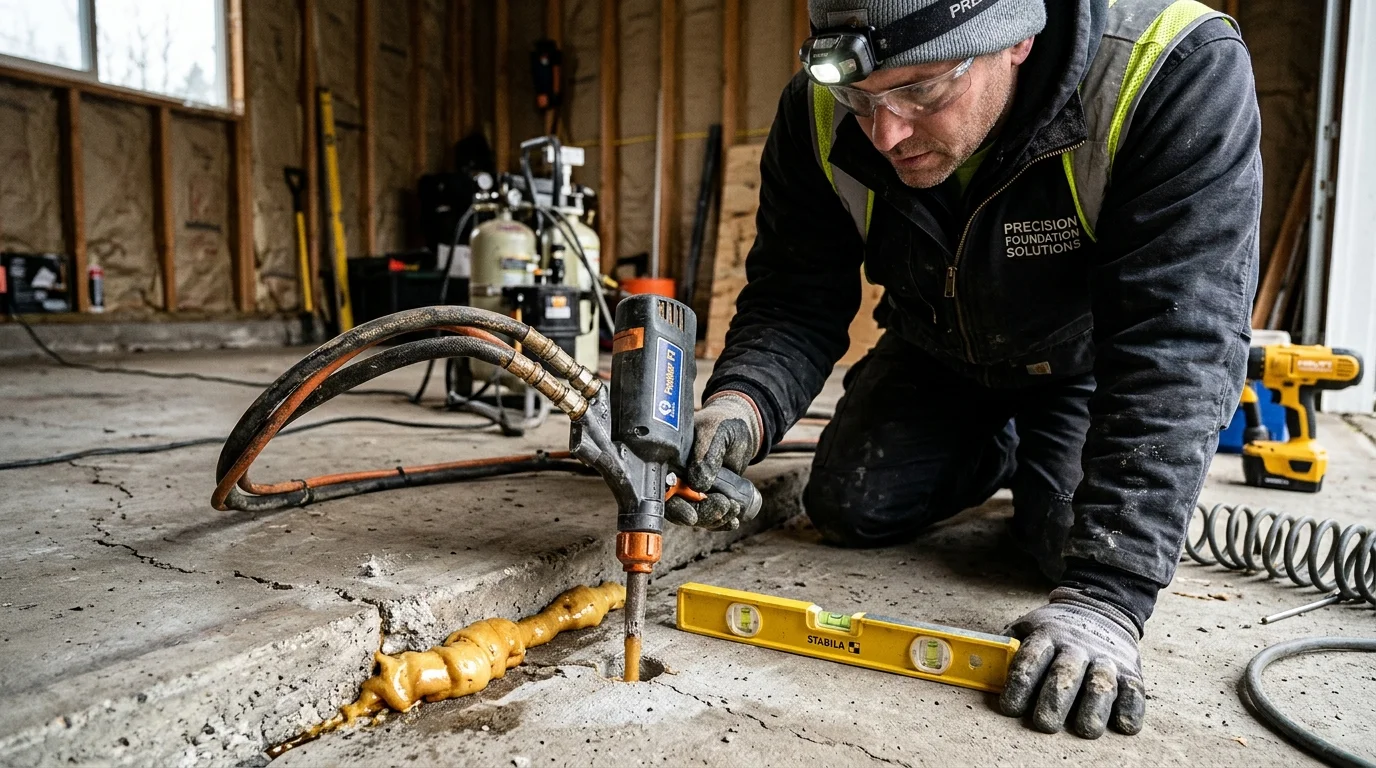
Polyurethane foam lifting, commonly referred to as polyjacking, is an engineered repair process. Technicians drill penny-sized 5/8-inch injection ports through the concrete floor or along grout lines. A two-part expanding structural polymer is injected directly into subterranean voids. As the liquid components react, they expand with hydraulic force, consolidating weak fill soils, filling all empty cavities, and gently lifting the concrete slab back to its target elevation. The material hardens in fifteen minutes.
Do I have to move out of my Murfreesboro home during polyurethane slab lifting?
No. Unlike traditional slab replacement or invasive mudjacking, polyurethane foam lifting requires no demolition and creates minimal dust. Injection equipment remains outside in our service vehicle, and only lightweight hoses enter the home. The repair is typically completed within a single day, and you can walk across the floor immediately after injection.
When are steel push piers required instead of polyurethane foam injection?
Polyurethane foam is ideal for raising settled interior concrete slabs and filling voids where the structural perimeter remains stable. However, if the exterior reinforced concrete grade beam or perimeter footing has settled due to deep soil movement, hydraulically driven steel push piers are required. Steel piers bypass unstable fill soil to anchor the perimeter footing directly into solid Ordovician limestone bedrock.
Does slab lifting cause plumbing pipes beneath the concrete to break?
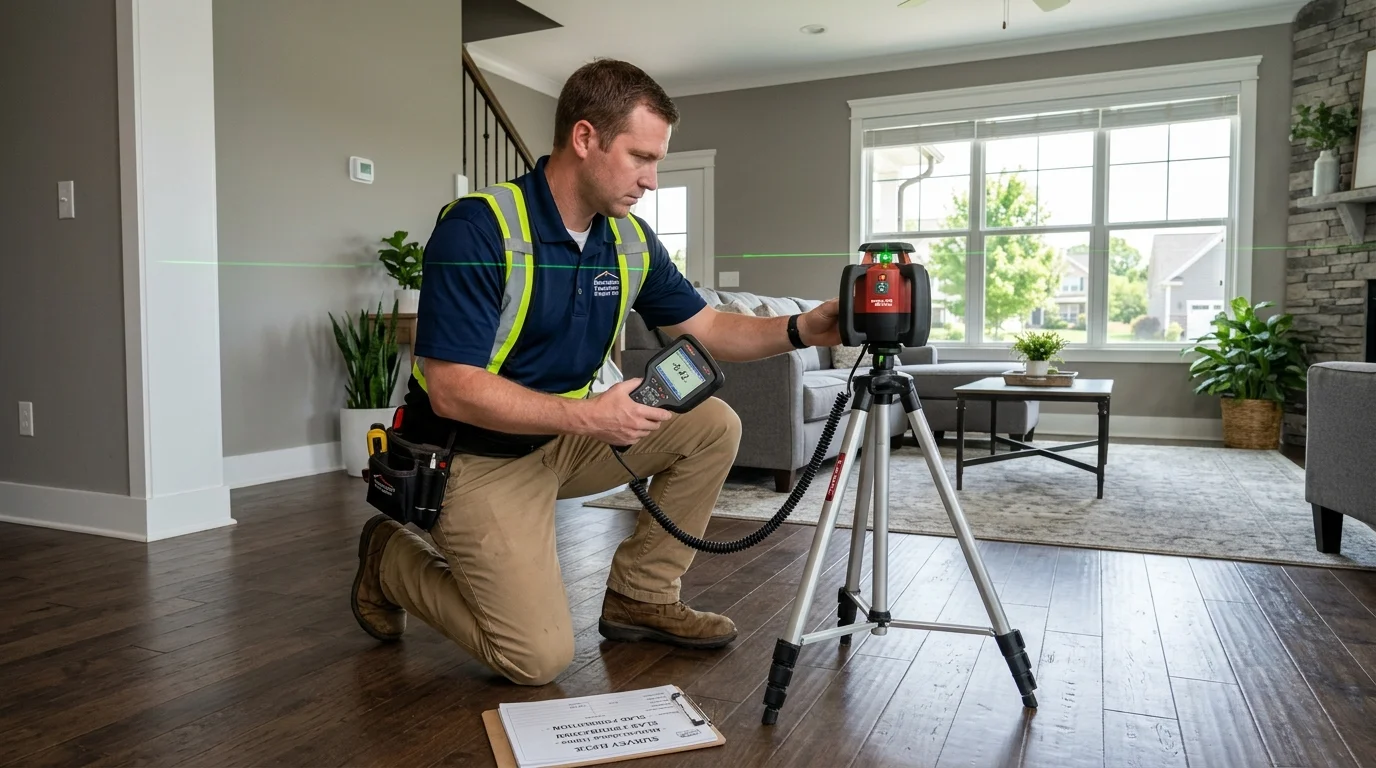
When performed by trained structural specialists using precision laser monitors, polyurethane injection gently relieves stress on trapped pipe penetrations. Before lifting, our technicians conduct careful elevation mapping to calculate exact lift points and prevent over-lifting that could compromise under-slab plumbing.
Do you charge travel fees for slab inspections in Blackman, Barfield, or Walter Hill?
No. All five Murfreesboro ZIP codes (37127, 37128, 37129, 37130, and 37132) are within our primary Middle Tennessee service zone. Our comprehensive on-site structural inspections, void assessments, and elevation surveys carry zero travel charges and zero inspection fees.
How do I schedule an on-site slab foundation inspection in Murfreesboro?
Call our local team directly or submit your property details through our contact form. A structural specialist will discuss the symptoms you are noticing, verify your Murfreesboro address, and schedule an on-site laser elevation survey.
Request Your Murfreesboro Slab Inspection
If your Murfreesboro home shows signs of floor sloping, cracked tiles, or sticking doors, speak with a local specialist to schedule an on-site structural evaluation and digital elevation survey.
Zero on-site travel charges across 37127, 37128, 37129, 37130, and 37132. Factual evaluations with zero sales pressure.